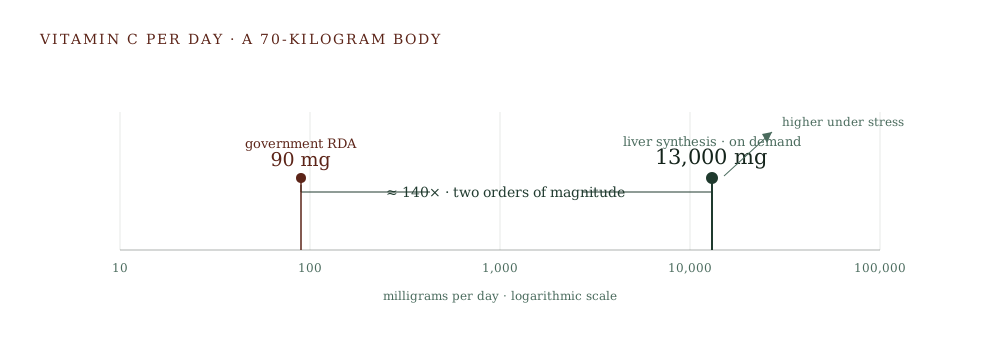
A 70-kilogram goat, going about its ordinary day, produces approximately thirteen thousand milligrams of vitamin C in its liver. Under stress, infection, or injury, that number can rise several-fold. The goat does not eat citrus to achieve this. It does not take supplements. Its body simply makes the vitamin C it needs, on demand, in real time, calibrated to the physiological load of the moment.
A 70-kilogram human is told by their government that ninety milligrams of vitamin C per day is sufficient.
The gap between these two numbers is one of the most consequential and least examined facts in modern medicine. It exists because of a genetic accident roughly sixty-one million years old. It is the foundation of an argument that has been quietly suppressed for forty years. And it points directly at one of the leading causes of death in the modern world.
This article is the next demonstration of the framework this series has been building. The same logic that applied to vitamin D applies to vitamin C — and applies, in my read, more dramatically. The dose conventional medicine recommends bears no relation to what the human body would produce if it could. The reason it cannot is a broken gene. The consequences of that breakage have been understood, in outline, for at least three decades. The institutional response has been to ignore the implication and continue managing the downstream symptoms.
This is the article that walks through what was lost, what the implication was, and why the public has never been told.
The 60-million-year-old accident
Most living things make their own vitamin C. Plants, fungi, the overwhelming majority of mammals, most birds, most reptiles, most invertebrates. The molecule is so essential to cellular function that the ability to synthesise it has been preserved through hundreds of millions of years of evolution.
A small group of species lost it. Humans, our closest primate relatives, guinea pigs, fruit bats, certain passerine birds, most fish. In each case, the loss happened the same way — through inactivating mutations in a single gene called GULO, which encodes the enzyme L-gulonolactone oxidase that catalyses the final step in vitamin C biosynthesis. In primates, the genomic evidence places the loss at approximately sixty-one million years ago, in a common ancestor that we share with all modern monkeys and apes.
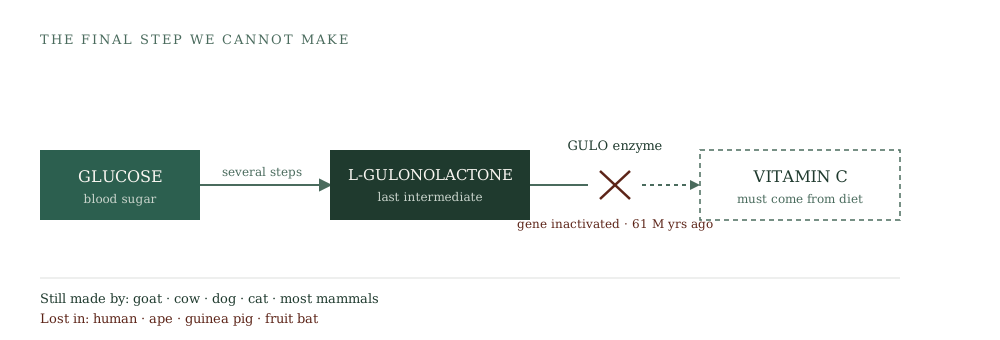
Why this happened is debated. The leading hypothesis is the ascorbate-rich diet hypothesis — that our ancestors lived in environments where dietary vitamin C was abundant, the cost of producing it endogenously was no longer worth the metabolic investment, and the loss-of-function mutation was therefore neutral rather than harmful. There are other hypotheses involving glucose metabolism trade-offs and oxidative biology. The mechanism of loss is clear; the evolutionary reason is less so.
What matters clinically is what we lost, and what we never replaced.
A goat, weighing approximately the same as an adult human, produces roughly thirteen thousand milligrams of vitamin C daily under normal conditions. This figure comes from peer-reviewed research dating to Subramanian and colleagues in 1973 and has been reproduced and refined since. Under conditions of physiological stress — infection, injury, oxidative challenge — endogenous vitamin C production in mammals that retain the GULO gene increases substantially, sometimes by an order of magnitude. The system is dynamic. It scales with demand.
Cats and dogs, both able to synthesise vitamin C, produce roughly ten percent of what goats produce per kilogram of body weight. This is part of why pets in modern domesticated environments increasingly suffer the same chronic diseases that humans do — they sit at the lower end of the synthesis range, in environments that constantly elevate oxidative demand.
The current Recommended Dietary Allowance for vitamin C in adult humans, set by most national health authorities, is between seventy-five and ninety milligrams per day. This figure was calibrated, like the RDAs for every other nutrient, to prevent named deficiency disease — in this case, scurvy. It is a Tier 1 number in the framework this series has built. It tells us nothing about optimal function. It tells us nothing about what the body would produce if its synthesis machinery were intact. It tells us only the minimum required to keep collagen production above the threshold at which gums bleed and teeth fall out.
What we lost when we lost GULO
It is tempting to think of vitamin C as a single-purpose nutrient — the antioxidant in the orange, the molecule that prevents scurvy. The reality is considerably stranger. Vitamin C is one of the most pleiotropic small molecules in human biology. It is structurally embedded in processes ranging from connective tissue assembly to neurotransmitter production to gene expression to immune cell function. Losing the ability to synthesise it on demand did not deprive humans of a single function. It deprived us of a regulatory thread that runs through dozens of physiological systems.
The most clinically consequential role is in collagen synthesis. Vitamin C is an essential cofactor for two enzymes — prolyl hydroxylase and lysyl hydroxylase — that hydroxylate proline and lysine residues during collagen formation. Without adequate vitamin C, collagen cannot fold into its stable triple-helix structure. The result is connective tissue that is structurally compromised. Blood vessel walls. Skin. Bone matrix. Cartilage. Tendons. Ligaments. The basement membranes that separate cellular compartments throughout the body. Every tissue that depends on collagen integrity depends, upstream, on adequate vitamin C status. The classic presentation of scurvy — bleeding gums, joint pain, poor wound healing, skin lesions — is what happens when collagen synthesis fails outright. The more subtle question, which conventional medicine has largely declined to ask, is what happens at every level of vitamin C status between outright scurvy and what theoretical optimum.
Beyond collagen, vitamin C is required for the synthesis of carnitine, the molecule that shuttles long-chain fatty acids into mitochondria for energy production. It is required for the conversion of dopamine to noradrenaline. It is a cofactor for a family of enzymes — the alpha-ketoglutarate-dependent dioxygenases — that include the prolyl hydroxylases regulating cellular oxygen sensing through HIF-1α, the TET enzymes that demethylate DNA, and the histone demethylases that remove methyl marks from histone proteins. This last group is genuinely remarkable. Vitamin C participates in the regulation of which genes are turned on and off in your cells. It is, mechanistically, an epigenetic regulator. The implication that vitamin C status affects gene expression in ways that matter clinically is not orthomolecular speculation — it is contemporary cell biology.
It is also required for normal neutrophil function — chemotaxis, phagocytosis, the respiratory burst that kills engulfed pathogens. White blood cells concentrate vitamin C at levels fourteen to thirty times higher than plasma. The cells that defend us from infection cannot function properly without it.
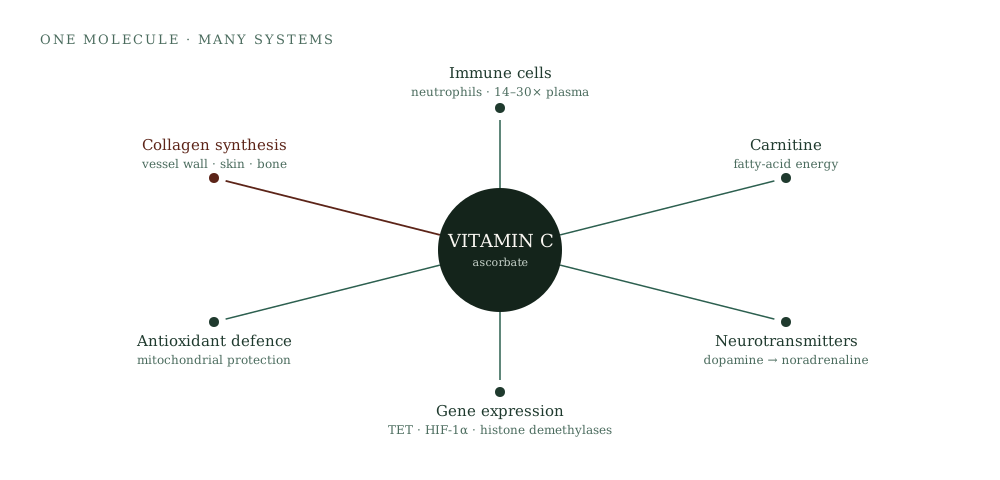
This is not a vitamin in the conventional sense of the word — a small dietary requirement to prevent a deficiency syndrome. This is a pleiotropic regulatory molecule that we lost the ability to make on demand, and that we have been quietly under-replacing for sixty-one million years. The framework argument from the first article in this series — that nutrients work through multiple pathways simultaneously, that single-mechanism trial designs cannot capture their effects, that the conventional model of one nutrient, one disease is methodologically wrong — has its single cleanest illustration in vitamin C.
The cardiovascular hypothesis
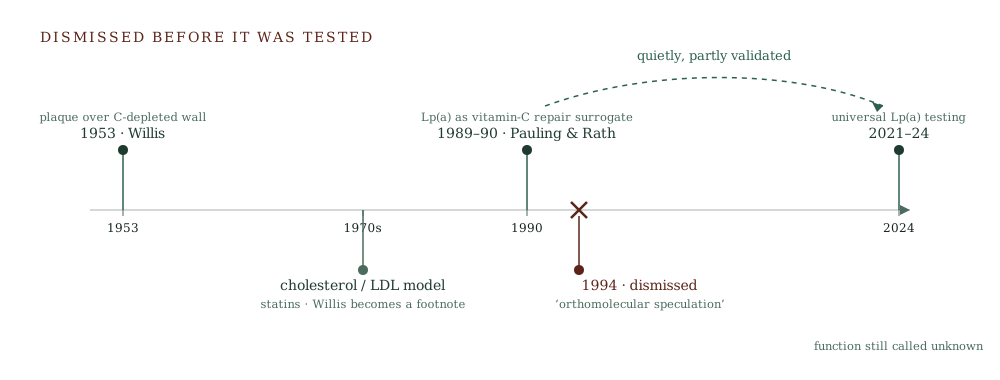
In 1953, a Canadian physician named G. C. Willis published an observation that should have changed cardiovascular medicine and did not. Working with both guinea pigs (one of the few non-primate species that, like humans, cannot synthesise vitamin C) and post-mortem human tissue, Willis demonstrated that atherosclerotic plaques form preferentially over vitamin C-depleted vascular walls. The deficiency came first; the plaque came after. The plaque was not the disease. The plaque was the body’s repair response to a structural failure that had already happened.
Willis’s work was largely ignored. In the 1970s and 1980s, cardiovascular medicine consolidated around what is now called the cholesterol hypothesis — the model in which LDL cholesterol drives atherosclerotic disease, and lowering LDL is the primary intervention. The cholesterol model produced statins, which produced cardiovascular benefit, which produced a pharmaceutical industry whose interests aligned with the model’s continuation. The Willis observation became a footnote.
In 1989, Linus Pauling — already holder of two Nobel Prizes — and his colleague Matthias Rath formulated what they called the Unified Theory of Human Cardiovascular Disease. The theory, published in Proceedings of the National Academy of Sciences in 1990 and developed across multiple subsequent papers in the Journal of Orthomolecular Medicine, made several specific claims. Cardiovascular disease, they argued, is fundamentally a chronic ascorbate deficiency state. The structural integrity of arterial walls depends on adequate collagen synthesis, which depends on vitamin C. When vitamin C is chronically inadequate — as it is in essentially the entire human population at conventional intake levels — the arterial wall becomes structurally compromised. The body’s repair response to this damage involves the deposition of a specific molecule, lipoprotein(a), at the sites of vascular injury. Lipoprotein(a), they noted, is found almost exclusively in species that cannot synthesise vitamin C — humans, other primates, guinea pigs. They proposed that Lp(a) had evolved as an evolutionary surrogate for ascorbate-dependent vascular repair. In species that make their own vitamin C, Lp(a) is rare or absent, and atherosclerosis is correspondingly rare. In species that cannot, Lp(a) levels rise, repair becomes the dominant arterial process, and the lesions of atherosclerosis accumulate over decades.
The theory was dismissed in the 1990s as orthomolecular speculation. Pauling died in 1994; Rath was eventually pushed out of the Linus Pauling Institute amid institutional friction; the unified theory faded from mainstream conversation.
Then something interesting happened. Mainstream cardiology spent the next thirty years, slowly and largely without acknowledgment, validating significant portions of the Pauling-Rath framework.
By 2024, the cardiology literature had begun calling that year the year of lipoprotein(a). The 2024 National Lipid Association guidelines, the 2022 European Atherosclerosis Society guidelines, and the 2021 Canadian Cardiovascular Society guidelines all now recommend universal Lp(a) testing in adults. Lp(a) is now classified, in mainstream cardiology, as a causal and independent risk factor for atherosclerotic cardiovascular disease and calcific aortic valve disease. Roughly one and a half billion people globally have elevated Lp(a). Pharmaceutical companies — including Amgen and Eli Lilly — are now in late-stage clinical development of expensive small-molecule therapies designed specifically to lower Lp(a).
What mainstream cardiology has not done, in the course of fully accepting Lp(a) as a major cardiovascular risk factor, is explain what Lp(a) is for. Recent reviews acknowledge openly that the normal physiological function of Lp(a) is unknown. The Pauling-Rath answer — that Lp(a) is an evolutionary repair molecule that becomes pathological precisely because chronic vitamin C inadequacy keeps it permanently deployed — remains one of the few coherent explanations on offer. It has not been disproven. It has simply been left unexamined while the institution monetises Lp(a) as a drug target.
The substantive claim of this article is not that the Pauling-Rath theory has been proven. It has not. The substantive claim is that the theory was dismissed before it was tested, has been quietly partially validated by mainstream evidence over the subsequent decades, points to an upstream cause where conventional medicine treats only downstream consequences, and has been kept out of public discussion because the implication — that adequate dietary and supplemental vitamin C might significantly reduce cardiovascular disease burden — is commercially uninteresting to the pharmaceutical model that dominates cardiovascular medicine.
This is not conspiracy. It is institutional capture of evidence, of the kind documented across mainstream medicine by Marcia Angell, John Ioannidis, and Ben Goldacre. A theory that points at a public-domain nutrient as the upstream solution to a major chronic disease is a theory that no commercial actor has any incentive to fund, validate, or popularise. Pauling and Rath produced the theory. The institution did not refute it. The institution simply moved on.
Beyond cardiovascular — the multi-system case
Vitamin C’s potential clinical utility is not limited to vascular health. The literature, when read honestly across multiple specialties, points to a molecule whose breadth of action is unusual and whose under-utilisation in clinical medicine is striking.
In immune function, vitamin C plays roles that are well-characterised mechanistically and clinically substantial. The Hemilä and Chalker Cochrane reviews on vitamin C and the common cold show modest reductions in cold duration with regular supplementation, with stronger effects in populations under physiological stress — athletes, soldiers, the elderly. The mechanism involves neutrophil function, lymphocyte proliferation, antibody production, and cytokine regulation. Vitamin C is concentrated in immune cells at levels far above plasma, and its depletion under acute infection — a phenomenon documented since the 1940s — suggests the body is using it actively, not merely storing it. There is a defensible argument that vitamin C’s role in immunity is at least as significant as vitamin D’s, and possibly more so for acute infection response.
In oncology, the situation is more complex and more interesting. Linus Pauling and the Scottish surgeon Ewan Cameron published observational data in the 1970s suggesting that high-dose vitamin C, given partly intravenously, prolonged survival in terminal cancer patients. Subsequent randomised trials at the Mayo Clinic by Creagan and Moertel, using only oral vitamin C, failed to reproduce the effect. The conventional reading of this history was that Pauling had been wrong. The contemporary reading is more nuanced. The Levine pharmacokinetic work of the late 1990s established that oral vitamin C cannot reach the millimolar plasma concentrations required for the cancer-cytotoxic mechanisms — those concentrations are achievable only through intravenous administration. The Mayo trials, in other words, tested a different intervention than Cameron and Pauling had reported. Modern research has returned to high-dose intravenous vitamin C with mechanism-aware protocols. In November 2024, a Phase II trial published in Redox Biology by researchers at the University of Iowa reported that adding intravenous high-dose vitamin C to standard chemotherapy approximately doubled overall survival in late-stage pancreatic cancer patients — from eight months to sixteen months. The senior author commented that the result looked too good. The study is one trial. It is also a mainstream-published Phase II trial showing a doubling of survival in one of the most lethal cancers. It deserves the attention it has not received.
In acute infection, including COVID-19, the picture is similar — substantive clinical evidence of benefit, dismissive mainstream framing, and significant gaps in proper investigation. The Malaysian Ministry of Health’s MAHTAS Rapid Evidence Update on intravenous vitamin C for COVID-19 referenced an unpublished Malaysian study comparing critically ill COVID-19 patients in two tertiary hospitals — those treated with high-dose intravenous vitamin C against those receiving standard care alone. The two groups had comparable clinical severity at admission. Mortality in the vitamin C group was 14.3 percent. Mortality in the non-treatment group was 71.4 percent. The sample was small — fourteen patients in total — and the document is explicit that this was not a controlled trial. The signal is nonetheless striking, and it sits within a broader literature on high-dose intravenous vitamin C in critical care that includes Marik’s work in sepsis, the CITRIS-ALI reanalyses, and multiple international COVID-era studies. The evidence is far from conclusive. It is also far from absent.
There is one further clinical application that deserves direct mention here, with the understanding that it is significant enough to warrant its own dedicated piece in this series. In my own clinical practice over more than a decade, working with vitamin C at therapeutic doses has been part of what has produced clinical improvements in early and mid-stage kidney involvement — patients presenting with haematuria, proteinuria, microalbuminuria, and declining estimated glomerular filtration rate. These are markers that conventional nephrology often considers, at best, stabilisable rather than reversible. The clinical observations from my practice suggest that the picture is more open than the conventional framing allows. Vitamin C’s role in collagen synthesis (renal basement membrane integrity), antioxidant defence (mitochondrial protection in the proximal tubule), and endothelial function (the renal microvasculature) provides a coherent mechanistic basis for what is observed clinically. A future article in this series will address kidney recovery in functional medicine specifically. For now, the observation is flagged as one more domain in which vitamin C’s role appears to be considerably larger than the conventional model has examined.
The institutional warnings, examined honestly
A piece making the case for therapeutic-dose vitamin C has to address, directly and without flinching, the warnings that conventional medicine routinely issues against high-dose vitamin C use. There are two that recur most often in mainstream medical guidance, and both deserve examination on their evidentiary merits rather than dismissal.
The first is the claim that high-dose vitamin C causes kidney stones. The mechanistic basis for this claim is real — vitamin C is metabolised, in part, to oxalate, and elevated urinary oxalate is a risk factor for the formation of calcium oxalate kidney stones, which are the most common stone type. The question is whether the population-level risk justifies the blanket warning. The honest answer is that it does not. The clinical literature shows that high-dose vitamin C produces a small, statistically detectable increase in stone risk in some populations — particularly men with pre-existing stone history, those with certain genetic predispositions in oxalate handling, and patients with significant renal impairment. In the general adult population, at therapeutic oral doses paired with adequate hydration, the absolute increase in stone risk is modest. The blanket warning issued by conventional medical sources, applied across all patients regardless of risk profile, is not a reflection of the evidence — it is a reflection of institutional caution that has been over-generalised to discourage a practice the institution has no commercial interest in defending.
The mechanistically informed clinical response is precisely what serious nutritional medicine does — assess individual risk, ensure adequate hydration, monitor urinary oxalate where indicated, and adjust dose or form for patients in the genuinely elevated-risk subsets. This is exactly the kind of individualised clinical attention that the institutional warning is designed to make seem unnecessary. Just don’t take high-dose vitamin C, problem solved. The problem is that this also makes the substantial clinical benefits of high-dose vitamin C unavailable to patients who could meaningfully benefit from them.
The second warning is the claim that high-dose vitamin C is hepatotoxic. This claim has even less evidentiary support. There is essentially no body of mainstream clinical evidence demonstrating liver toxicity from oral vitamin C at therapeutic doses in healthy adults. The hepatotoxicity narrative appears to rest on a small number of case reports in patients with severe pre-existing conditions, animal studies at extreme doses far exceeding any reasonable human protocol, and theoretical extrapolations from oxidative chemistry. Used as a public-health-level warning to deter adults from therapeutic-dose vitamin C, it is not supported by the data. The actual clinical reality is that vitamin C has one of the widest therapeutic windows of any biologically active molecule used in medicine. The lethal dose in animal studies is so far above any human therapeutic range that researchers struggle to establish it. By contrast, the institutional warnings issued about vitamin C are rarely accompanied by similar warnings for pharmaceutical agents with substantially worse safety profiles that the same institution prescribes routinely.
This asymmetric application of safety scrutiny is itself the institutional capture argument from the first article in this series, in concentrated form. A pharmaceutical molecule with vitamin C’s safety profile would be celebrated as remarkably safe. A public-domain nutrient with the same profile is presented as carrying real risks the public should be cautious about. The asymmetry is not accidental. It serves a commercial structure. It is precisely the kind of pattern that careful clinical practice should refuse to be governed by.
The defensible position is not that high-dose vitamin C is risk-free. No therapeutic intervention is. It is that the risks are smaller than the institutional framing suggests, are concentrated in identifiable subsets of patients, and are manageable through exactly the kind of clinical supervision this series has been arguing for throughout. The dose is not the safety mechanism. The supervision is.
The pharmacokinetic reality
If vitamin C does what the literature, the mechanism, and the clinical experience suggest it does, the immediate question is the one this series keeps returning to: how much, in what form, on what schedule? The answer is more constrained than enthusiasm for the molecule would suggest, and the constraints matter.
The foundational work on oral vitamin C pharmacokinetics was done by Mark Levine and colleagues at the National Institutes of Health, published in Proceedings of the National Academy of Sciences in 1996 and refined in subsequent papers. The Levine group hospitalised volunteers, depleted them of vitamin C through controlled diet, and then carefully measured plasma concentrations across a range of oral doses. Their findings established the constraints that govern oral vitamin C therapy.
Bioavailability is essentially complete — close to one hundred percent — at oral doses up to approximately two hundred milligrams. As the dose rises, the fraction absorbed declines. At a single oral dose of twelve hundred and fifty milligrams, absorption falls to roughly thirty-three percent. Beyond this, additional dose produces progressively diminishing increases in plasma concentration and progressively increasing fractions excreted unabsorbed in urine and stool. Plasma concentrations plateau at approximately seventy-five to eighty-five micromolar at intake levels of two hundred milligrams daily and above. Pushing oral intake higher produces marginal further elevation of plasma vitamin C — but not the order-of-magnitude increases that some clinical applications require.
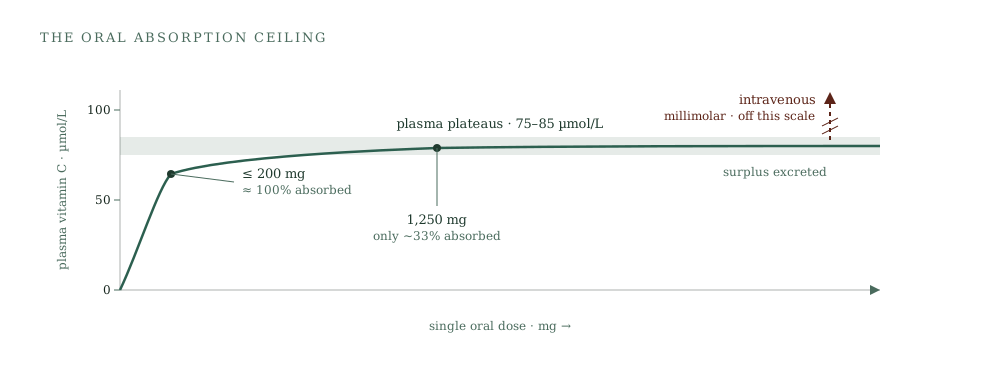
The implication for therapeutic-dose oral protocols is direct: large single doses are wasteful. Most of what is taken in a single five-gram capsule passes through the patient with limited systemic benefit. Therapeutic-range oral vitamin C therefore depends on divided dosing — multiple smaller doses spread across the day, each timed to fit within the absorption window before saturation, with cumulative daily intake adjusted to clinical need and bowel tolerance.
Bowel tolerance is the practical upper boundary for oral dosing. Above the patient-specific threshold, unabsorbed vitamin C draws water into the colon and produces loose stool. The threshold varies enormously between patients, and it shifts with the patient’s clinical state — patients fighting infection or under high oxidative stress can tolerate substantially higher daily doses than they could when well, because the body is consuming the vitamin C more rapidly. This is one of the few self-titrating clinical signals in nutritional supplementation, and it is genuinely useful.
In my own clinical practice over more than a decade, working dose ranges typically sit between seven and fifteen grams of vitamin C daily, divided across multiple administrations, calibrated to the individual patient’s clinical context, comorbidities, and response. This is significantly higher than the mass-market guidance and reflects therapeutic intent rather than nutritional supplementation in the conventional sense. Patients with active infection, recovery contexts, or specific clinical indications may sit at the upper end of this range or beyond. Patients on maintenance protocols may sit at the lower end. The exact dose, in every case, is calibrated to the patient — not to a label.
For applications that genuinely require millimolar plasma concentrations — particularly the cancer-adjunct context discussed earlier — oral dosing cannot achieve the necessary levels regardless of how the dose is divided. Intravenous administration is the only route that can. This is why high-dose intravenous vitamin C exists as a separate clinical tool, with its own set of indications, protocols, and monitoring requirements. It is not a stronger version of oral supplementation. It is a different intervention that produces different pharmacokinetic exposure for different clinical questions.
Liposomal formulations of oral vitamin C represent a partial workaround for the absorption ceiling, using lipid encapsulation to bypass some of the saturable transport mechanisms in the small intestine. The peer-reviewed evidence on liposomal vitamin C is mixed but generally positive — liposomal forms appear to achieve higher plasma concentrations than equivalent doses of standard ascorbic acid, though the difference is not as dramatic as some marketing claims suggest. They are a useful tool in the clinical kit, particularly for patients who cannot tolerate higher oral doses of standard vitamin C, but they do not eliminate the underlying pharmacokinetic constraints.
A closing argument
The argument this article has made is straightforward. Humans cannot synthesise vitamin C because of a broken gene. Other mammals make ten to a hundred times more vitamin C per kilogram than the human RDA recommends. The molecule we lost the ability to produce is not a single-purpose vitamin — it is a multi-system regulator with roles in collagen synthesis, immune function, neurotransmitter production, gene expression, and antioxidant defence. The cardiovascular hypothesis proposed by Willis, Pauling, and Rath — that chronic vitamin C inadequacy underlies a substantial portion of human atherosclerotic disease — was dismissed before it was tested, and has been quietly partially validated by mainstream Lp(a) literature in the decades since. The institutional warnings against high-dose vitamin C are real but over-generalised in ways that serve a commercial structure rather than the patient. The pharmacokinetic constraints of oral dosing are real and require divided-dose protocols. The clinical applications extend across cardiovascular health, immune function, cancer adjunct care, critical care, and kidney recovery.
What follows from this is not a recommendation that you go and take ten grams of vitamin C tomorrow. It is the same conclusion that every article in this series has arrived at, by different routes. Therapeutic-dose vitamin C is a clinical protocol, not a consumer product. It requires understanding of pharmacokinetics, of patient-specific risk factors, of bowel tolerance and divided dosing, of when oral is sufficient and when intravenous becomes necessary, of cofactors and supporting nutrients, of monitoring. None of this happens in a pharmacy aisle. None of this happens through self-experimentation guided by online articles, however well-researched. All of it happens, when it happens responsibly, in clinical relationships with practitioners trained in nutritional and functional medicine.
In my own practice, working with vitamin C at therapeutic doses across more than a decade, the clinical observations have been consistent enough that I no longer treat vitamin C as a supplement in the conventional sense of the word. It is a clinical agent with a specific pharmacokinetic profile, specific dose-response relationships, and specific applications across multiple organ systems. It is also, by a substantial margin, one of the most under-utilised therapeutic tools available to nutritional medicine. The reason for the under-utilisation is not clinical. It is institutional.
We lost the ability to make vitamin C sixty-one million years ago. We have spent the intervening time, particularly the last seventy years, being told that ninety milligrams a day from food is sufficient to replace what evolution took. That number was set to prevent the gums from bleeding. It was never designed to address what the body would do with vitamin C if the GULO gene still worked. It is, on its face, one of the most extraordinary acts of public health quietism in modern medicine.
The conversation worth having, again, is with a clinician who can read the pharmacokinetics, the cofactors, the labs, the patient’s specific clinical picture, and design a protocol calibrated to the goal that is actually being pursued. The framework is not radical. The molecule is not exotic. The institutional silence around what therapeutic-dose vitamin C can do, in supervised settings, is the only genuinely radical thing in this entire conversation.
Vitamin C, used properly, works. The reason most people do not see what it can do is the reason this article, like every article in this series, exists.