Most people walk into a pharmacy, pick up a bottle of vitamins, and ask the wrong question.
They ask: how much should I take?
The right question is: what am I trying to achieve, and does this dose match that goal?
These sound like the same question. They are not. And the gap between them is where two very different industries — pharmaceuticals and direct-selling supplements — have built billion-dollar businesses on a single, shared act of confusion.
This article is not a sales piece. It is an attempt to close a public education gap that has cost a generation its understanding of what nutrients actually do. It will argue that there are at least four entirely different reasons to put a nutrient into your body, that each one demands a completely different dose, frequency, and duration, and that the supplement industry — whether through pharmaceutical caution or direct-selling enthusiasm — has trained the public to collapse all four into one. Once you can see the four clearly, you cannot unsee them.
It will also argue — and this is the part that matters most — that operating at the higher tiers safely requires a clinician trained in nutritional and functional medicine. Not a pharmacy aisle. Not a wellness consultant. The same precision that makes high-tier nutritional therapy effective is what makes it dangerous when self-prescribed.
The question nobody is asked
Walk through any pharmacy aisle. Read the back of any supplement bottle. Listen to any direct-selling consultant explain why you should take their product daily. You will hear language about wellness, immunity, energy, anti-aging. You will hear the dose printed in milligrams or international units. You will hear that you should take it every day, ideally for life.
What you will rarely hear is the goal. Not the marketing goal — the clinical goal. Are you trying to avoid getting scurvy? Are you trying to pass your next blood test? Are you trying to feel sharper at work? Or are you trying to reverse a metabolic condition that conventional care has not been able to reverse?
These are four different goals. They require four different interventions. The supplement industry has trained the public to ignore this distinction entirely.
“The dose on the bottle was rarely calibrated to your physiology. It was usually calibrated to a regulatory floor, a marketing model, or a monthly repurchase cycle.”
The four tiers of nutrient intake
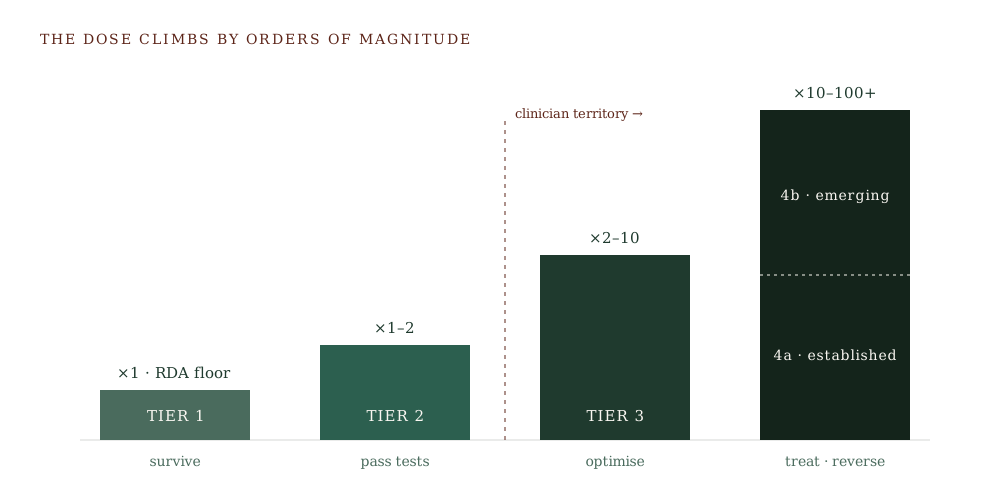
Nutrients do not have one job. They have a spectrum of jobs, and the dose required for each job is fundamentally different. The cleanest way to see this is to recognise that there are at least four distinct tiers of intervention. Each one answers a different question. Each one has its own logic.
A side-by-side view
| Tier | Tier 1 — Survive | Tier 2 — No Disorder | Tier 3 — Fit | Tier 4a — Established | Tier 4b — Emerging |
|---|---|---|---|---|---|
| Goal | Avoid deficiency disease | Pass blood tests | Optimal function | Treat established conditions | Reverse complex conditions |
| Dose | RDA floor | RDA – 2x RDA | 2 – 10x RDA | 10 – 100x RDA | Pharmacological |
| Frequency | Daily, low | Daily, low | Daily or cyclical | Loaded, scheduled | Phased protocol |
| Duration | Lifelong | Lifelong | Long-term | Time-bound | Time-bound |
| Monitoring | None | Annual | Periodic biomarkers | Active clinical | Active clinical + biomarker |
| Evidence | Population data | Lab references | Functional medicine | RCT + decades clinical | Mechanism + biomarker + observation |
Read across each row. The differences are not differences of degree — they are differences of kind. A Tier 1 dose and a Tier 4 dose of the same nutrient are not on the same scale. They are doing different things in the body.
Tier 1 — The bare minimum to survive
Goal: avoid named deficiency disease. Outcome: you do not develop scurvy, rickets, beriberi, or pellagra.
The Recommended Dietary Allowance, or RDA, is the foundation of nearly every supplement label sold worldwide. It originates from American wartime nutrition policy in the 1940s and was designed for a single, narrow purpose: to set a population-level floor that would prevent overt deficiency diseases in roughly 97 percent of healthy people.
That is the entire scientific brief of the RDA. Avoid scurvy. Avoid rickets. Avoid beriberi. Avoid pellagra. Avoid the named, terminal-if-untreated deficiency syndromes that ravaged populations before modern food fortification.
The RDA was never designed to define health. It was never designed to define wellness. It was certainly never designed to define optimal function. It is a survival floor, set by a committee, eight decades ago, for a public health problem largely solved through fortified flour, salt, milk, and cereal.
And yet today, that 1940s survival floor is the dose printed on the back of nearly every multivitamin sold in every pharmacy on the planet. The supplement industry has built its mass-market product line around the lowest meaningful dose ever defined for a nutrient — and then sold it to the public as the answer to modern wellness.
It is not. It was never meant to be. Tier 1 doses prevent terminal deficiency. They do not produce health.
Tier 2 — Clinically normal
Goal: pass standard blood tests. Outcome: you are labelled healthy by the medical system.
If Tier 1 is the survival floor, Tier 2 is the medical baseline. It is the level of nutrient status that produces lab values inside the standard reference range, with no diagnosed condition flagged on your chart. The doctor looks at your panel, ticks the boxes, and tells you that you are normal.
This sounds reassuring until you understand how reference ranges are constructed. They are statistical, not optimal. A reference range is calculated by sampling a population, measuring their values, removing the outliers at each end, and declaring the middle ninety-five percent to be normal.
Whether that middle ninety-five percent is actually well depends entirely on which marker you are measuring.
For markers like sodium, potassium, calcium, TSH, and standard liver enzymes, conventional reference ranges are derived from genuinely healthy populations and have a strong evidentiary basis. The critique that follows does not apply to them.
But for markers tied to modern metabolic and inflammatory health — vitamin D, fasting insulin, ferritin, hs-CRP, HbA1c, fasting triglycerides — the reference range increasingly describes the average of a population that is itself becoming metabolically compromised. These ranges have shifted in recent decades not because of changes in the underlying physiology of health, but because of changes in the population being sampled.
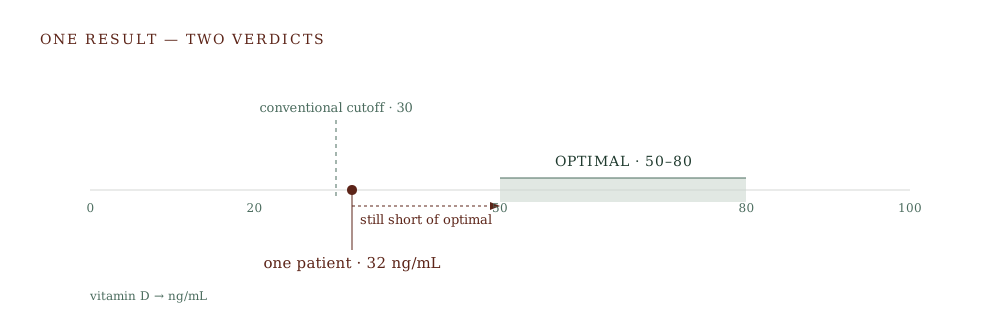
Vitamin D is the cleanest example. The conventional reference range labels almost anyone above 30 ng/mL as sufficient. Functional medicine, drawing on the literature relating vitamin D status to immune function, bone density, mood, and cardiovascular outcomes, increasingly targets 50 to 80 ng/mL. The same patient, with the same blood result of 32 ng/mL, is normal under one framework and clinically suboptimal under the other.
Fasting insulin tells the same story. A normal fasting insulin under conventional ranges may sit at 15 to 20 µIU/mL — a level that, viewed through the lens of metabolic health literature, signals significant insulin resistance years before glucose dysregulation appears on a standard panel.
Tier 2 is the dose that keeps you inside the reference range. For some markers, that is genuinely reassuring. For others, it tells you only that you are typical of an unwell population. Passing the test is not the same as being well.
Tier 3 — Fit and functionally optimal
Goal: optimise function. Outcome: sustained energy, sharper cognition, better recovery, stable mood, biomarkers in optimal — not merely normal — zones.
Tier 3 is where most informed health-conscious adults actually want to live, and where the conventional supplement industry rarely goes. The goal here is not deficiency-prevention; it is functional optimisation. You are not asking what is the minimum to avoid disease — you are asking what nutrient status produces the best version of normal physiology.
The doses required for this tier are typically two to ten times the RDA, depending on the nutrient. They are targeted, not blanket. They consider individual context: age, lifestyle, metabolic demand, genetic variants, medication burden, baseline labs. Magnesium for someone who exercises hard and sleeps poorly is a different protocol from magnesium for a sedentary office worker. Omega-3 for someone with a high-inflammation profile is a different protocol from omega-3 for someone with a clean lipid panel.
This is also where dosing logic begins to diverge from the daily-pill ritual. Some Tier 3 strategies are daily; some are cyclical; some are seasonal. Vitamin D is dosed differently in winter than summer. B-vitamins respond to stress load. Iron is best handled by alternating-day protocols rather than daily, for absorption reasons most consumers have never been told about.
Tier 3 is not a single product taken consistently. It is a calibrated protocol that changes with the patient. No mass-market multivitamin is dosed for this tier, because the entire premise of mass-market supplementation — one product, one dose, taken by everyone forever — contradicts what Tier 3 actually requires.
Tier 4a — Established therapeutic nutrition
Goal: reverse or manage a specific clinical condition using nutritional pharmacology with strong evidentiary support.
At Tier 4, the nutrient stops being a nutrient in the conventional sense and becomes a therapeutic agent. The doses are pharmacological, often 10 to 100 times the RDA. The duration is phased — there is a loading phase, a maintenance phase, and often a taper. The frequency is no longer a daily ritual; it is whatever pharmacokinetics demand.
A subset of Tier 4 protocols sits on solid evidentiary ground. These are the interventions that have survived randomised trials, observational studies, and decades of clinical use, and are accepted within mainstream practice for specific indications:
High-dose vitamin D loading, 50,000 IU weekly or monthly, to correct documented deficiency.
Intramuscular vitamin B12, dosed monthly, for pernicious anaemia and other absorption-related deficiencies where oral supplementation cannot achieve target serum levels.
Intravenous magnesium in obstetric use for eclampsia and pre-eclampsia, and in cardiology for specific arrhythmias.
High-dose folate in specific clinical contexts, including methylation disorders and prevention of neural tube defects.
N-acetylcysteine at gram-level doses for paracetamol overdose and respiratory conditions.
These are not fringe interventions. They are standard medical practice, taught in conventional curricula, prescribed by conventional clinicians. They prove that nutritional pharmacology works at therapeutic dose, when the dose, frequency, and duration are matched correctly to the clinical goal.
Tier 4b — Emerging clinical nutrition
Goal: reverse or manage conditions where the conventional standard of care has limited efficacy, using protocols supported by mechanism, biomarker response, observational data, and accumulating clinical experience — but where randomised trial evidence is still developing.
This is where serious functional medicine actually lives, and it deserves to be named honestly rather than blurred into the established tier above.
Tier 4b includes protocols like high-dose intravenous vitamin C in oncology supportive care, NAD+ precursor loading for mitochondrial restoration, targeted nutrient stacks for autoimmune modulation, and specific high-dose nutritional protocols for neurodegenerative conditions. These protocols are mechanistically grounded. Many show measurable biomarker response. Clinical experience across thousands of practitioners, accumulated over years, supports their use in carefully selected patients.
The randomised trial evidence is still developing — and in some cases, may never reach the standard demanded for pharmaceutical approval, because nutritional pharmacology resists clean trial design in ways the next section will address.
The honest framing for this tier is that we are operating ahead of definitive trial evidence, justified by mechanism, biomarker response, established safety profile, and clinical observation in supervised settings. This is not a weakness. It is what serious clinical practice looks like in any specialty operating at the frontier of a field. Oncology runs ahead of trial evidence routinely, through compassionate use and off-label prescribing. Cardiology has done the same. The convention that nutrition must wait for evidence that other specialties act on without waiting is itself a form of asymmetric scrutiny.
What separates Tier 4b done responsibly from Tier 4b done recklessly is exactly this: supervision, biomarker tracking, time-bound protocols, established safety profile, mechanistic plausibility, and a willingness to update practice when evidence accumulates against a protocol. A clinician who cannot articulate what would change their practice is not doing medicine at this tier. They are doing belief.
Why the trial framework alone cannot judge nutritional medicine
A reasonable reader at this point will ask the obvious question: if Tier 4b protocols work, why have they not been validated through the trials we accept for everything else?
The answer is methodological, not evasive — and it is increasingly acknowledged within mainstream nutrition science itself.
The randomised controlled trial was designed for a specific kind of intervention: a single molecule, single mechanism, single pathway, given to a homogeneous population, against a placebo, measured at a defined endpoint. It is the right tool for that question. It is the wrong tool, or at least an awkward tool, for interventions that:
Operate through pleiotropic mechanisms across multiple pathways. Magnesium is a cofactor in more than 300 enzymatic reactions in human physiology. A trial designed to test what magnesium does cannot measure all 300 endpoints, so it picks one or two — and inevitably misses most of what the nutrient is doing in the body.
Interact heavily with diet, microbiome, baseline status, and genotype. A vegan and a ketogenic dieter taking the same dose of vitamin C will not have the same response, because the absorption, utilisation, and downstream cascade differ across metabolic contexts.
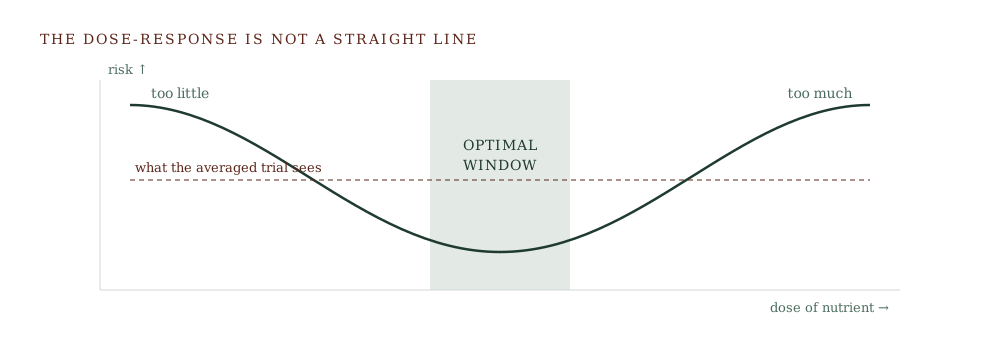
Produce non-linear dose responses. U-shaped and J-shaped curves are common in nutrition. The dose that helps a deficient patient may harm a replete one. A trial that averages across a heterogeneous baseline will see no signal where strong signals exist within subgroups.
Have effects that compound over months to years. Trial budgets reward six-week endpoints. Many nutritional interventions act on biological timescales that exceed any reasonable trial duration.
This is why some high-dose nutrient trials have failed despite strong mechanistic and observational support — the trial design was mismatched to the intervention. It is also why some have succeeded; vitamin D for falls in the deficient elderly, folate for neural tube defects, omega-3 for triglyceride reduction. Trials are not blind to nutrition. They are awkwardly fitted to it.
The position this article takes is not that randomised trials should be ignored. It is that they are one tool among several — and that responsible nutritional medicine integrates trial data, mechanistic understanding, biomarker response, observational outcomes, n-of-1 clinical experience, and traditional knowledge into a richer evidentiary toolkit. This is closer to the original definition of evidence-based medicine articulated by David Sackett — the integration of best available evidence, clinical expertise, and patient values — than the institutional version that has drifted toward trial-supremacy in the decades since.
A clinician facing one patient is not making a population-level regulatory decision. They are making an individual clinical decision under time constraint. The patient does not have unlimited time to wait for trials that may never be funded, because no pharmaceutical company stands to profit from validating a public-domain nutrient. Refusing to act in the absence of trial evidence is not safer practice. It is slower practice, and the cost is paid by the patient.
The history of medicine is unflinching on this point. Semmelweis observed in 1847 that doctors washing their hands before delivering babies cut maternal mortality from approximately eighteen percent to two percent. The medical establishment rejected this for decades, demanding mechanistic explanation that germ theory had not yet provided. Semmelweis died in an asylum. Women died in numbers we can count, because the institution required validation it had not yet developed the tools to deliver. Lind’s citrus for scurvy. H. pylori and ulcers, where Marshall and Warren had to drink the bacterial broth themselves to be taken seriously. The pattern is consistent: institutional caution, demanding higher levels of evidence than the situation actually requires, has cost lives across centuries.
The lesson is not that observation should override skepticism. The lesson is that skepticism should not require complete mechanistic explanation before acting on a high-magnitude clinical observation with acceptable safety profile and a plausible mechanism. This is the principle that responsible Tier 4b practice operates by today.
Why the public was given the wrong map
If the four tiers are this distinct, why has the public been allowed to think there is only one? The answer requires looking honestly at the structural incentives in two different industries that benefit from the confusion.
The pharmaceutical model
The pharmaceutical model has a coherent internal logic. A drug is a patentable molecule, taken at pharmacological dose, for a defined therapeutic outcome, with monitored follow-up. That is exactly Tier 4 logic. The model works. It saves lives. There is nothing wrong with it where it applies.
The problem appears at the boundary. If nutrients can also be used at pharmacological dose — if a vitamin, a mineral, or an amino acid can produce a measurable clinical outcome at the right dose, frequency, and duration — then the strict separation between drug and nutrient begins to dissolve. The economic structure of the pharmaceutical industry depends on that separation. A patented molecule generates returns that a public-domain nutrient never will.
The result is what former New England Journal of Medicine editor Marcia Angell, Stanford’s John Ioannidis, and Oxford’s Ben Goldacre have all documented in mainstream venues over the past two decades: an evidence base that is not a neutral scientific record, but a financially shaped record. Pharmaceutical companies fund the majority of clinical research in their own products. Authors of clinical practice guidelines often have financial relationships with the manufacturers of the drugs in those guidelines. Negative trial results go unpublished at higher rates than positive ones. The evidence the public is told to trust is the curated subset that survived institutional and economic filtering.
This is not conspiracy. It is institutional capture of evidence — and it has produced a public that genuinely believes nutrients have a low ceiling, that the RDA is the answer, and that anything more is at best wasteful and at worst suspicious. The question of whether nutrients work at therapeutic dose is rarely asked, because the public has been trained to assume the answer.
The direct-selling model
The direct-selling supplement industry has the opposite problem and reaches the same destination by a different road. Direct selling, multi-level marketing, and network distribution business models depend on one variable above all others: predictable monthly repurchase.
If a customer takes a product daily, runs out at the end of the month, and reorders, the business works. If a customer takes a product in a clinical phase, completes a course, and stops, the business breaks. Every aspect of the dosing logic that the direct-selling industry teaches its consultants — take it daily, take it forever, take it for general wellness — is calibrated to the first model and not the second.
The dose is set low enough that no individual bottle produces a dramatic clinical effect, because a dramatic effect would be the prelude to discontinuation. The protocol is daily because daily intake creates a habit, and habits drive subscription revenue. The marketing language is wellness, energy, and immunity — broad, unfalsifiable categories that allow indefinite use without any defined endpoint.
The integrity question here is not whether daily-for-life dosing exists. It exists in conventional medicine too — statins for established cardiovascular disease, metformin for type 2 diabetes, antihypertensives, SSRIs. The question is whether the dose matches the goal. A statin for established cardiovascular disease is daily because the underlying pathology is daily. An RDA-level multivitamin is daily because the marketing demands it. Same surface behaviour, very different alignment with patient outcome.
The convergence
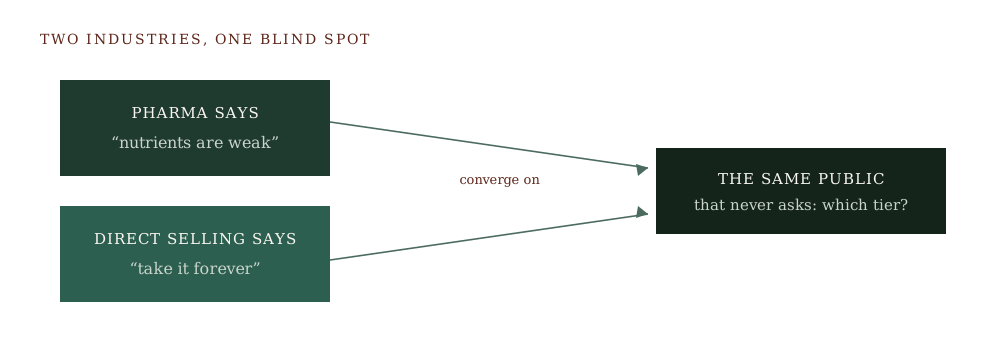
The two industries appear to be opposed. They are not. Pharmaceutical messaging insists nutrients are weak; direct-selling messaging insists nutrients are infinite-use lifestyle products. Both messages converge on the same outcome — a public that cannot distinguish between the four tiers, cannot ask the right question, and therefore buys whichever product is in front of them.
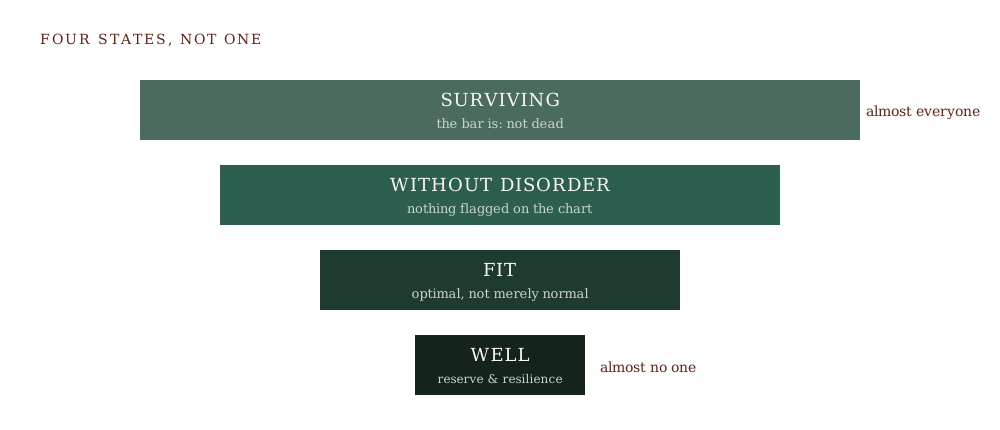
Surviving, normal, fit, well — they are not the same
Step away from the supplements for a moment. The same confusion exists in how the public thinks about health itself. Most people use four words interchangeably that describe four different states.
Surviving. Your physiology has not yet failed in a way that demands emergency intervention. You are alive. The bar is set at not dead.
Without disorder. No condition has been diagnosed and named on your medical chart. Your blood tests sit inside the reference range. The medical system has nothing to flag.
Fit. You have energy through the day, you sleep well, you recover from exertion, your mood is steady, your cognition is clear, and your biomarkers — vitamin D, fasting insulin, hs-CRP, HRV, VO2 max where measured — sit in the optimal zones, not merely the normal ones.
Well, in the deeper sense. Your physiology has resilience and reserve. Your systems regulate themselves under stress. Your trajectory is regenerative rather than degenerative. This state can be approximated through measurable proxies — heart rate variability, metabolic flexibility on glucose tolerance testing, inflammatory load, mitochondrial markers where assessment is available — and it is the legitimate target of long-term integrative care.
Most people in modern urban environments are surviving and labelled without disorder. Many fewer are fit. Almost none are well in this fourth sense. The supplement industry, by selling Tier 1 doses to people who want to be fit, has guaranteed that the gap is rarely closed.
“You can pass every blood test in the building and still not be well. That is not mysticism. It is what reference ranges, honestly read, actually tell us.”
How to ask the right question
If you take only one practical lesson from this piece, take this. Before you take any supplement, before you continue any supplement you currently take, before you accept any supplement recommendation from any source, ask one question.
Which tier am I trying to operate at, and does this dose match that goal?
Then check the answer against four simple tests.
If the goal is to avoid named deficiency disease, an RDA-level multivitamin is reasonable. You are at Tier 1. A daily, low-dose, lifelong product is appropriate. Do not expect dramatic effects, because you are not buying dramatic effects. You are buying insurance against scurvy.
If the goal is to pass a standard blood test, the same Tier 1 logic mostly works. Be aware that for metabolic and inflammatory markers, passing the test is not the same as being well.
If the goal is functional optimisation — energy, cognition, recovery, mood, performance — then RDA-level products are almost certainly insufficient. You need Tier 3 thinking. This means targeted, individualised, biomarker-guided dosing, often two to ten times the RDA for specific nutrients, frequently with cyclical rather than uniform daily intake. A general-purpose multivitamin will not produce these outcomes. At this tier, you genuinely need a clinician trained in nutritional medicine to design the protocol. Self-prescription typically does not produce Tier 3 outcomes — and can produce harm through ill-matched dosing.
If the goal is to reverse a clinical condition — metabolic, inflammatory, hormonal, neurological, autoimmune — then you are at Tier 4. The dosing logic is pharmacological, the protocol is phased and time-bound, the monitoring is active. Self-prescription at this tier is not safer. It is more dangerous, not because nutrients are inherently dangerous, but because pharmacological doses without monitoring can produce harm in patients with conditions they do not know they have. High-dose iron in undiagnosed haemochromatosis. High-dose vitamin D without calcium monitoring. High-dose niacin without liver function tests. The risks are real, and they are managed through clinical supervision, not avoided by staying at Tier 1.
The mistake the public is trained to make is to treat all four tiers as a single product category. You buy a multivitamin, take it daily, and assume it covers everything. It does not. A Tier 1 dose cannot deliver Tier 3 outcomes, and a Tier 3 protocol cannot replace Tier 4 therapy. The tiers are not interchangeable. The dose has to match the goal.
A closing argument
There is nothing radical in what is written here. Everything in this article is consistent with the published scientific literature on nutritional pharmacology, with the standards of practice in functional and nutritional medicine, and with how serious clinical care is delivered around the world.
What is radical is that this conversation has been kept from the public for two generations. A combination of regulatory caution and commercial interest has produced a population that takes supplements without knowing what tier they are operating at, and a medical system that does not raise the question because the question lies outside its training. The result is the largest unforced error in modern wellness — millions of people doing something every day that does not match what they are trying to achieve.
If you have read this far, the next time you pick up a supplement bottle you will not ask how much. You will ask which tier, and why, and for how long, and toward what outcome. That single change in how you ask the question is, by itself, more important than most of what you have ever been sold.
But asking the right question is only the first step. Acting on the answer — at Tier 3 and especially at Tier 4 — requires a clinician who can match the dose to your physiology, monitor your response, and adjust the protocol over time. This is not a failure of empowerment. It is what empowerment honestly applied looks like. The same precision that makes high-tier nutritional therapy effective is exactly what makes it dangerous when done without supervision.
The supplement industry has spent two generations training the public to believe that nutrient therapy is something you buy. It is not. Nutrient therapy, at the tiers that actually change outcomes, is something you receive — from a clinician trained to deliver it, in a setting structured to support it, with monitoring that catches what self-prescription cannot.
That is the conversation the public was never given. This article is one attempt to start giving it.