Plant-based dinner? Give protein a place.
Start with an ingredient, then build a meal you enjoy.
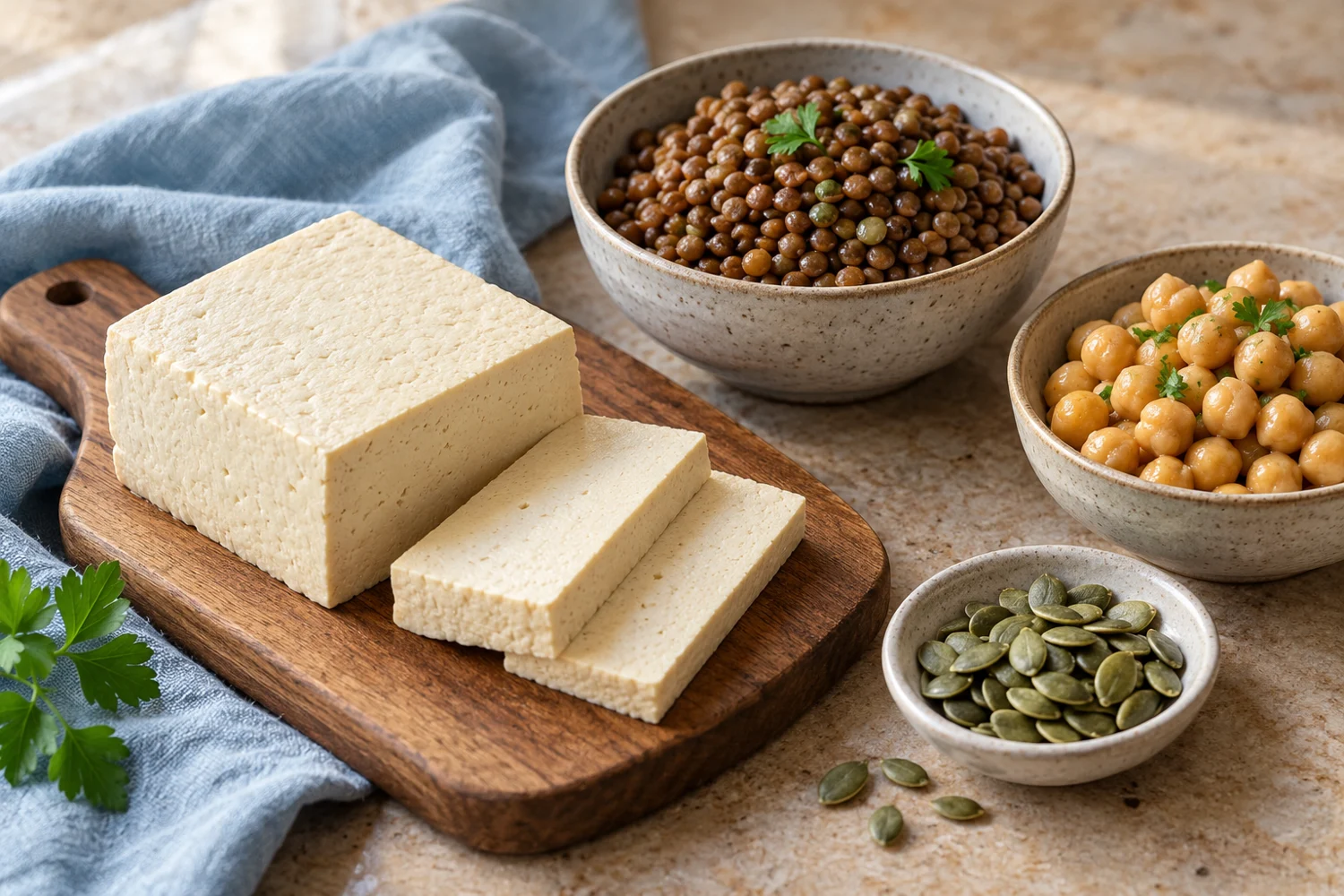
Taking meat off the plate leaves a space. Filling that space with more rice is one option; choosing a plant-based protein food is another.
The useful question is simple: where is the protein food in this meal?
Pick an ingredient before a label
Tofu, tempeh, beans, lentils, nuts and seeds are examples of plant-based protein foods. They can fit into meals you already recognise: dhal with a meal, tofu in soup, beans in a stew, or tempeh in a stir-fry.
They are not interchangeable gram for gram. A sprinkle of seeds and a serving of tofu do different jobs on a plate. Product, amount and the rest of the meal matter.
Keep the meal enjoyable
Choose a preparation you like enough to repeat. Give tofu a sauce you enjoy. Put lentils into a familiar tomato base. Use texture, herbs and acidity to make the food something you want to eat.
A meal assembled from plants can take many forms. This note is a starting question, not a calculation of your personal protein needs or a complete guide to planning a fully vegan diet. Those needs vary with the person and the overall eating pattern.
Try this: name the protein food before you start cooking, then build the rest of the meal around it.
Reading behind this note
Health Canada: cooking with plant-based protein foods describes practical uses for legumes, tofu and tempeh. It supports ingredient choices, not an individual intake target.