Plant omega-3: know what the food provides.
A packet of seeds can tell you it contains omega-3. The useful next question is: which kind?
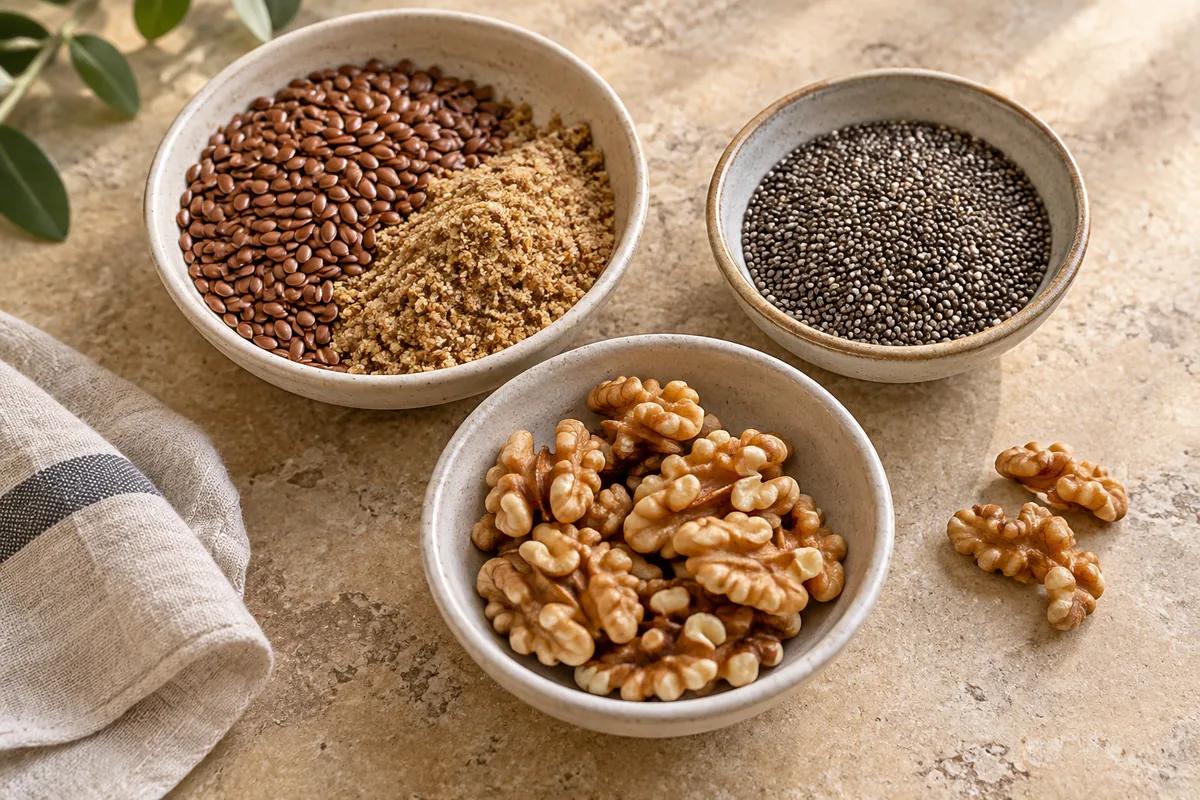
A packet of seeds can tell you it contains omega-3. The useful next question is: which kind?
ALA is an essential omega-3 fat found in plant foods, including flaxseed, chia seeds and walnuts. EPA and DHA are different forms. Our bodies can convert ALA into them, but conversion is limited. That is different from saying plant fats are poorly absorbed. [1]
Keep the food practical
You might stir ground flaxseed into plain soy yoghurt, scatter walnuts over a vegetable dish, or use chia in a pudding you already know how to make.
Choose something that fits the meal and your budget. You do not need all three ingredients in the same bowl. Use alternatives that suit any nut or seed allergies.
These are ways to include ALA-containing foods. They are not a measured plan for supplying EPA or DHA, and a spoonful of seeds cannot be assumed to replace a specific dose of either. [1]
Leave the ratio out of dinner
The original article approached this through balancing omega-6 against omega-3. It is tempting to turn that into a single number to aim for.
The NIH fact sheet notes that an optimal ratio has not been defined. ALA and the omega-6 fat linoleic acid are both essential. [1]
For an everyday reader, understanding the names is a more useful starting point than trying to calculate a ratio across a week of meals.
This pantry suggestion does not establish whether you need an EPA or DHA supplement. That is a separate question requiring your diet and circumstances, rather than a promise on a seed packet.
Sources, evidence and limits
Evidence basis: NIH Office of Dietary Supplements health-professional fact sheet: introduction, conversion, food sources and ratio discussion reviewed. This is an official evidence synthesis, not a new individual trial.
Least certain: An individual’s conversion of ALA and whether their diet meets their particular needs. This article does not assess adequacy or prescribe supplementation.
Contrary evidence and context: ALA foods provide an essential nutrient, while limited conversion means their inclusion does not establish equivalent EPA/DHA provision. No universally optimal omega-6:omega-3 ratio is established.
What would change the conclusion: Revise with authoritative changes to intake guidance or relevant individual assessment; a dietary restriction, life stage or clinical need may change the appropriate advice.
Reading behind this piece
Topic inspiration: 6 Simple Steps To Balancing Omega Fatty Acids (And Why It’s So Important!) — Lea Basch, 2016-05-22. Full archived MBG article read; not merely the newsletter excerpt.
Original wording for Everyday. A focused evidence check, not a systematic review.