Fruit or juice? Start with the whole fruit.
A familiar food choice, with one useful distinction: what juicing leaves behind.
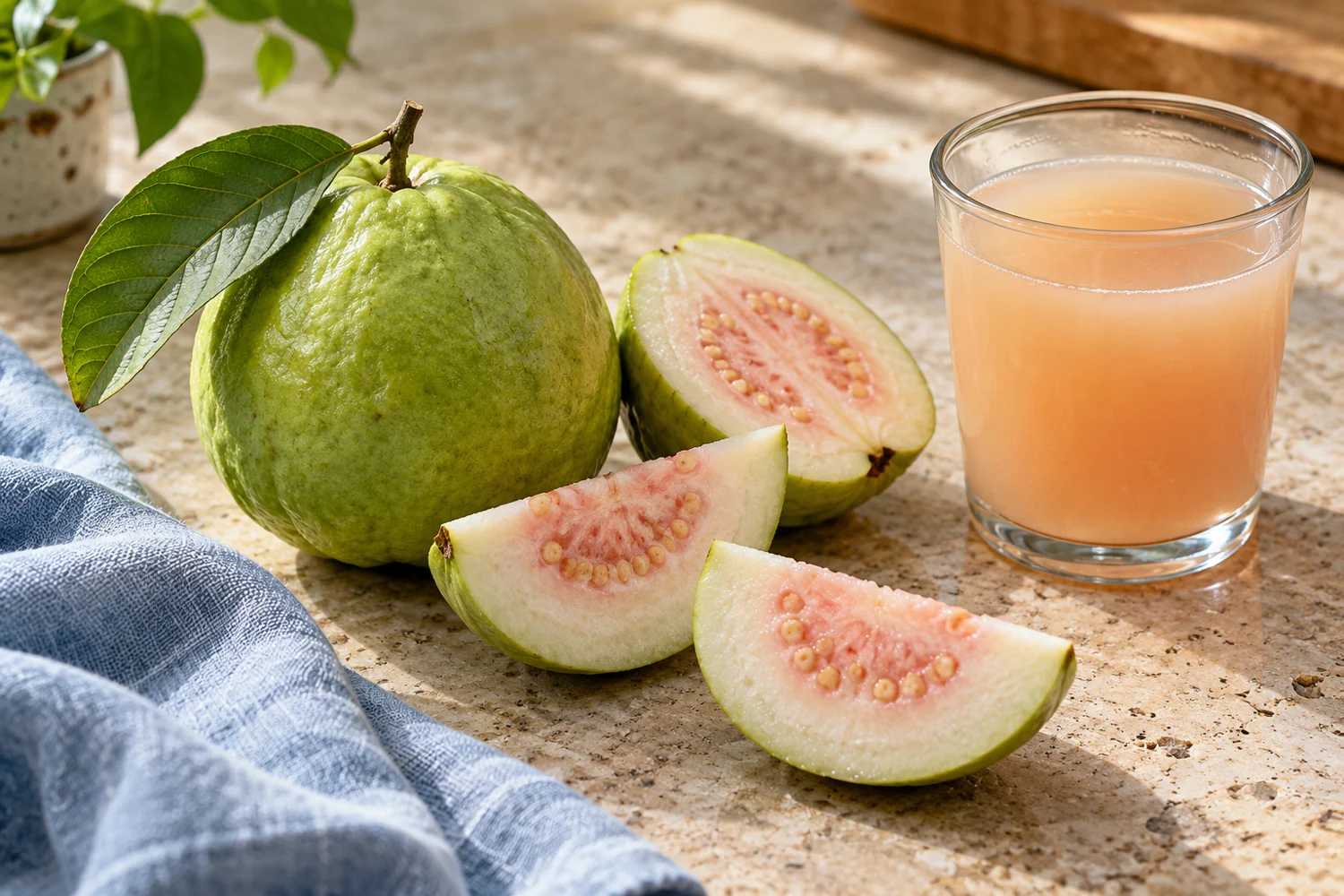
A piece of guava and a glass of guava juice begin with the same fruit. They do not necessarily give you the same thing.
The useful difference is what stays behind. Most juicing removes much of the fruit’s fibre. Eating the fruit keeps that fibre with the food.
The flesh and fibre stay with the food.
Much of the fibre is left behind.
Keep the distinction clear: a blend retaining the pulp is different from strained juice.
Make the easy choice visible
Put washed fruit where you can see it. Pack a mandarin, cut a guava, or add fruit to a meal. It does not need to become a project before it counts as food.
If you enjoy juice, keep the distinction clear: a drink made from fruit does not automatically replace the whole fruit. “No added sugar” tells you about what was added. It does not tell you how much fibre remains.
A useful exception
Blending the whole fruit while keeping the pulp is different from extracting and straining its juice. Juice also contains nutrients; the point is to understand the difference, rather than label one glass as a verdict on your whole diet.
For an ordinary everyday choice, start with the fruit you can eat.
The small takeaway: before asking which fruit is best, ask whether you are eating the fruit or drinking what was extracted from it.
Reading behind this note
USDA Food Buying Guide: fruits explains that fruit juice contains less dietary fibre than whole fruit.