Frozen vegetables count, too.
A useful freezer ingredient does not need to compete with a perfect market basket.
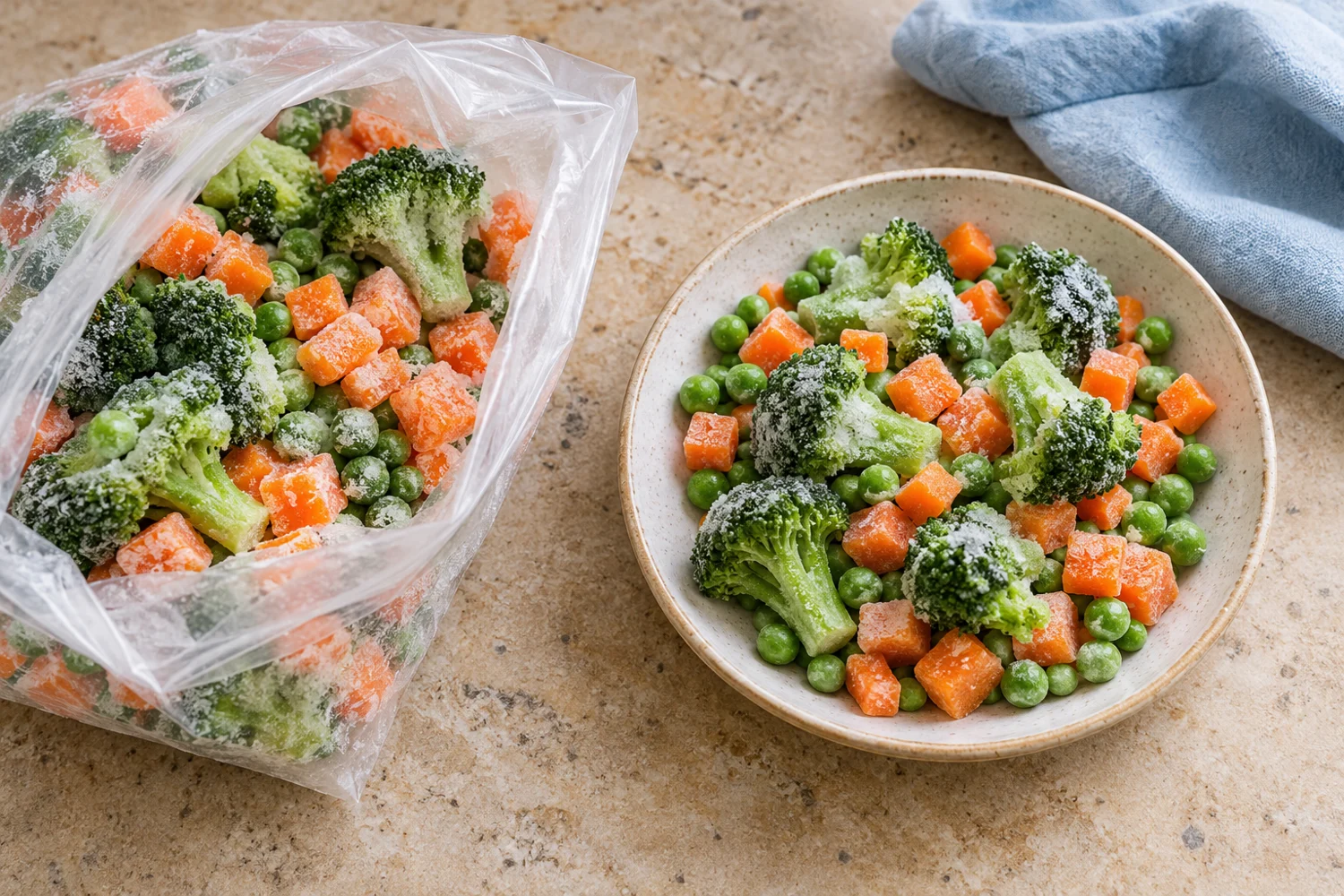
The bag of peas in your freezer has one advantage over the ambitious bunch of greens you never got around to cooking: it can still become dinner.
Fresh vegetables are useful. So are frozen ones. Frozen vegetables count towards fruit-and-vegetable guidance; convenience does not cancel their place in a meal.
Choose the version you will use
A plain bag of broccoli, peas or mixed vegetables can go into a soup, stir-fry or side dish. Cook it according to the packet instructions. Frozen food should not be assumed ready to eat straight from the bag.
When comparing products, look beyond the word “vegetables”. A plain mix and vegetables covered in a sauce are different products. The ingredients and preparation still matter.
Leave room for variety
This is not a claim that every fresh and frozen product has identical nutrition. The vegetable, storage and cooking method all affect what ends up on the plate. Fresh ingredients also offer textures that frozen ones may not reproduce.
The practical question is which option helps you put vegetables into a meal you will actually eat. Sometimes that is fresh produce. Sometimes it is the bag already in the freezer.
Try this: keep one plain frozen vegetable you enjoy, and give it a regular job in a meal you already cook.
Reading behind this note
NHS: 5 A Day—what counts? includes frozen vegetables. The preparation ideas here are practical suggestions, not a claim that all products are equivalent.