Canned beans: look past the tin.
Convenience, ingredients and a quick rinse can belong in the same conversation.
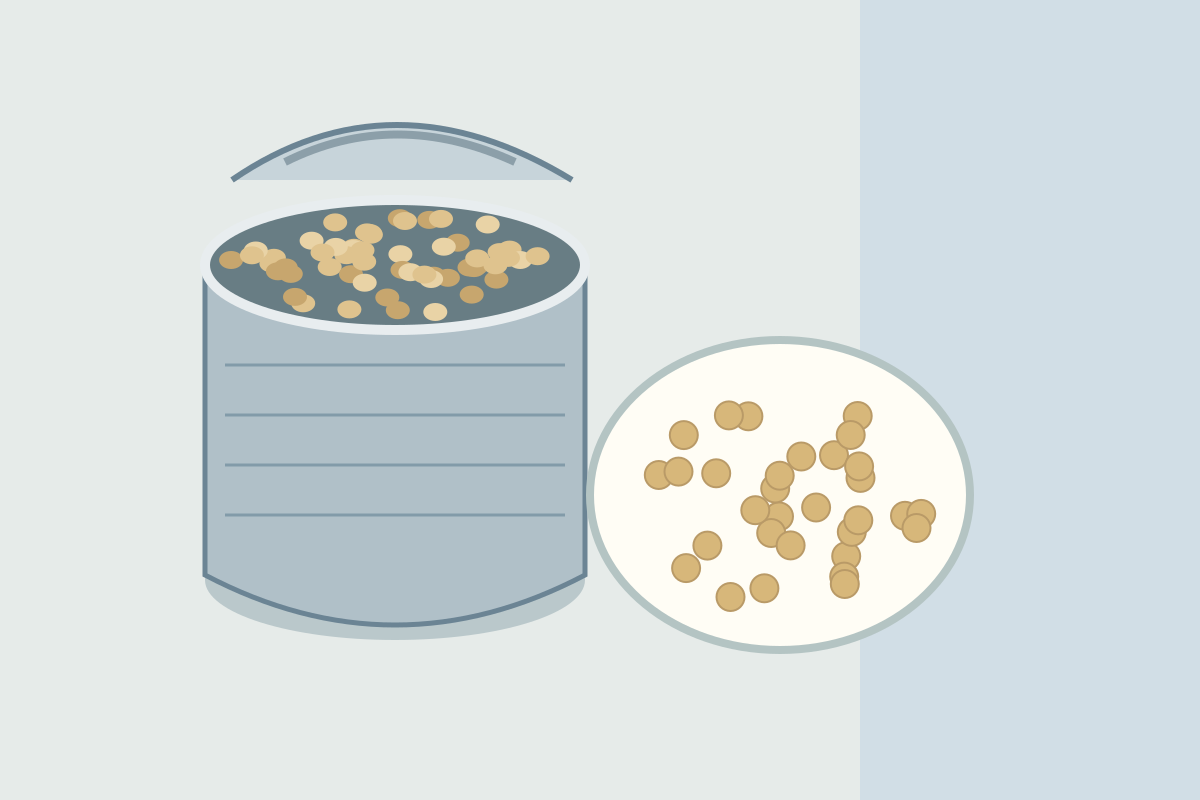
A tin can tell you how a food was stored. It does not, by itself, tell you whether that food belongs in your lunch.
Canned beans are a convenient way to keep a familiar ingredient ready. The useful questions are on the label: which beans, what else was added, and how will you use them?
Read the product you are buying
Plain chickpeas in water and beans in a sweet sauce are different ingredients. Check the ingredient list and compare sodium on the same serving basis. A no-added-salt option can be useful when it is available.
For plain beans that you are using without their liquid, drain and rinse them. This can reduce some of the sodium. It does not mean every product becomes salt-free, or that rinsing replaces reading the label.
Give convenience a purpose
Add the beans to a soup, a tomato sauce or a salad. Keep the rest of the meal in view: vegetables, other ingredients, portions and taste still matter.
Canned beans also do not need the same preparation as dried beans. Follow the instructions for the product you have, rather than borrowing the method from a different ingredient.
The small takeaway: judge the food and its ingredients, not the packaging alone.
Reading behind this note
Newfoundland and Labrador: fresh, frozen and canned foods discusses choosing little or no added sodium and draining and rinsing canned vegetables. The amount removed varies; no fixed reduction is promised here.