A drink does not become healthier because it contains fruit.
A glass can look like a wellness drink long before you know what is in it. Bright fruit, fresh herbs, sparkling water and a description about antioxidants.
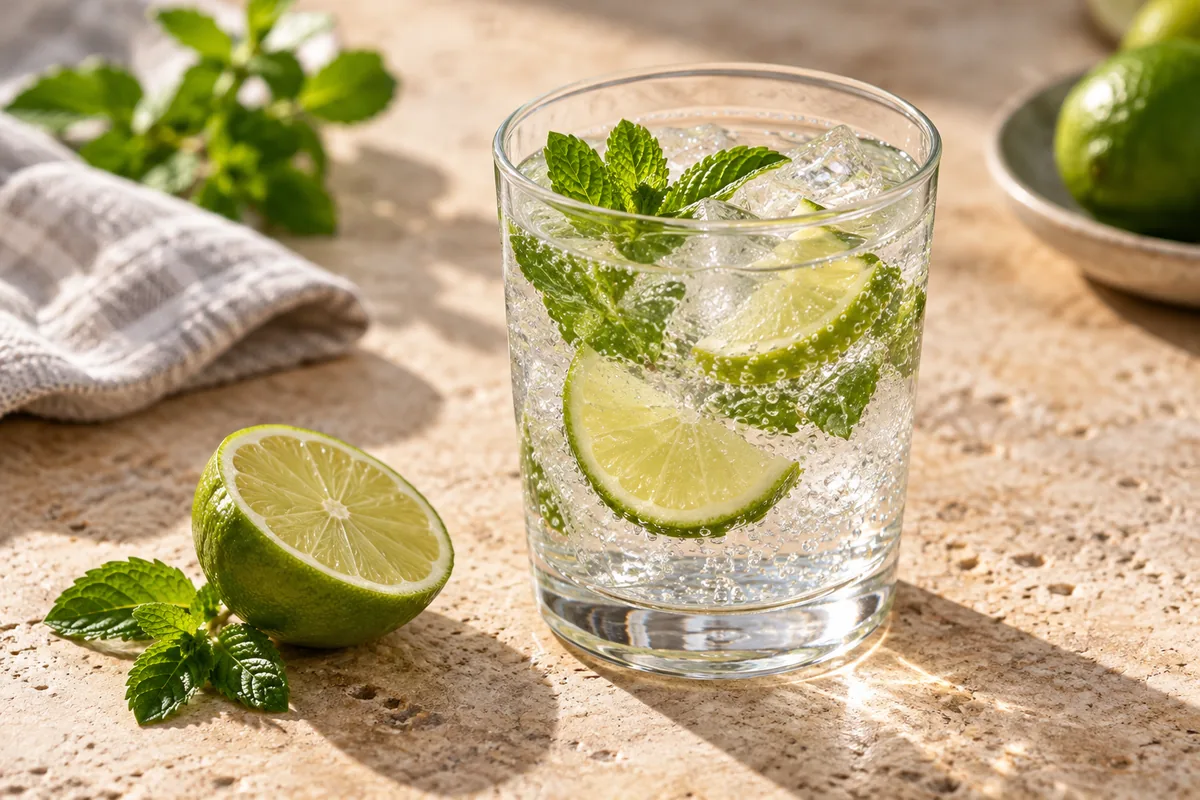
A glass can look like a wellness drink long before you know what is in it. Bright fruit, fresh herbs, sparkling water and a description about antioxidants.
If it also contains alcohol, the fruit does not establish that the drink protects you from alcohol’s effects.
Separate flavour from protection
A squeeze of citrus can change the taste. It does not demonstrate that a cocktail repairs the liver or cancels the risks from its alcohol.
WHO identifies health risks even at low levels of alcohol consumption, with most harm coming from heavy episodic or continuous drinking. Risk varies with the amount, pattern and individual context. That is different from declaring a particular spirit healthy because it contains less sugar. [1]
Make the alternative something you want
If you would rather leave alcohol out, you can still choose a drink you enjoy. Sparkling water with lime and a few crushed mint leaves is one simple serving idea. Plain water or a familiar unsweetened drink may suit you just as well.
There is no need to call it a detox. This is not a clinically tested drink or a treatment, and it does not come with a promised effect on the next morning.
You can choose flavour without turning it into a health claim. At a gathering, having an appealing alcohol-free option available can simply make that choice easier.
The useful distinction is on the ingredient list, rather than in the photograph.
Sources, evidence and limits
Evidence basis: WHO alcohol fact sheet read, including health risks and pattern-dependent harm. No primary trial of antioxidant cocktail mixers was reviewed; the original protection claim is not established by this evidence.
Least certain: An individual’s absolute risk or the effect of a particular drinking pattern; this draft does not quantify either.
Contrary evidence and context: Risk differs by amount, context and person; low exposure is not equivalent to heavy drinking. Flavour and sugar changes can be real without neutralizing ethanol-related harm.
What would change the conclusion: An individual medical or dependency context changes appropriate advice; specific causal trial evidence would be required for a protective-mixer claim.
Reading behind this piece
Topic inspiration: The Healthiest Booze You Can Drink This Weekend — Dr. David A. Greuner, 2016-05-27. Full archived article body read, including the ending; not a newsletter-only reading.
Original wording for Everyday. A focused evidence check, not a systematic review.