The previous article in this series argued that the conventional weekly or monthly bolus approach to vitamin D is the wrong tool for ongoing maintenance. The mechanism explains why. The trial data supports it. The institutional habit of treating bolus as a long-term solution is not defensible on either pharmacokinetic or outcome grounds.
That argument has a natural follow-up question. If monthly bolus is wrong, what is right?
This article makes the positive case. It will not give you a single number to copy-paste into your daily routine, because that would be exactly the kind of wellness-influencer claim that the rest of this series has been arguing against. It will give you something better — a working framework that mirrors what serious nutritional medicine actually does in clinic, with the dose ranges, the serum targets, the cofactors, and the monitoring that together turn vitamin D from a vague supplement into a clinical protocol.
The headline argument is straightforward: for ongoing vitamin D maintenance in a typical adult, daily dosing in the range of 4,000 to 8,000 IU, paired with the right cofactors and tracked through periodic biomarker monitoring, is the working reference point used across serious functional medicine practice. The serum target most often pursued is the upper end of the optimal range — 60 to 80 ng/mL — for reasons this article will explain. The exact number for any specific patient is determined by their physiology, their context, and their response. None of this is exotic. All of it is what conventional medicine should be doing and largely is not.
This is also the article where I write something I rarely publish. In my own practice, I have been using 4,000 IU per day as a working therapeutic dose for over a decade, in patient populations where vitamin D status is part of the clinical picture. By the standards of serious nutritional medicine, that is a conservative figure — sitting at the lower end of the range I am about to argue for. I am writing this here because it is honest, because the public discussion of this nutrient has been corrupted by both sides, and because there is a difference between cautious within rigorous practice and cautious in the way that produces no clinical effect. Vitamin D, used properly, works. The reason most patients do not experience that is the reason the rest of this article exists.
Why target the upper quadrant of the optimal range
The conventional reference range labels serum 25(OH)D above 30 ng/mL as sufficient. That number was set to prevent named deficiency disease — primarily rickets, osteomalacia, and the more obvious skeletal consequences of vitamin D deficiency. It is a Tier 1 number in the framework this series has built. It is not an optimal-function number.
The functional medicine literature that has accumulated over the past two decades, drawing on outcome data across immune function, bone density, mood, cognitive function, and cardiovascular markers, has converged on a different working target. Most serious practitioners aim for serum 25(OH)D somewhere in the range of 40 to 80 ng/mL for ongoing health, with the higher end of that range associated with the strongest signal across multiple endpoints.
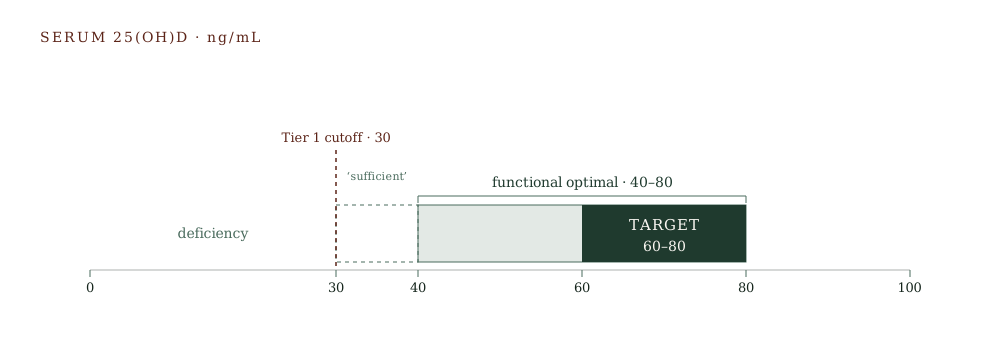
Within that range, there is a practical reason to target the upper quadrant — 60 to 80 ng/mL — rather than the lower one. The reason is buffering.
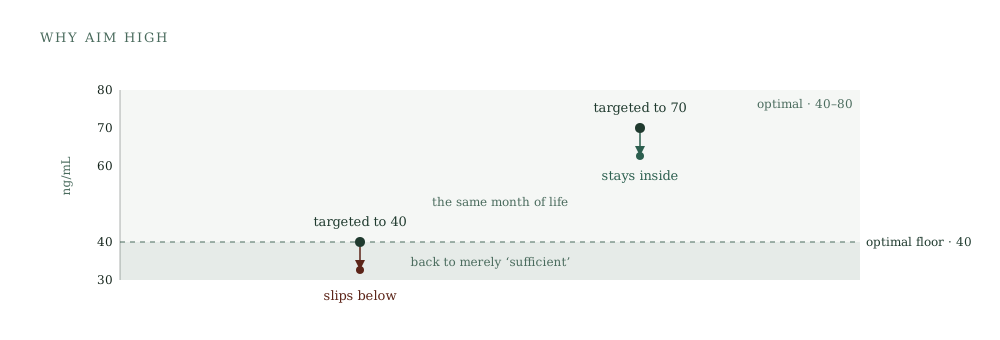
A patient is not a controlled experiment. Their day-to-day intake of vitamin D from food, their sun exposure, their absorption efficiency, their sleep quality, their stress level, the medications they are on, their seasonal context, the inflammatory load they are carrying — all of these vary continuously, and all of them affect what their serum 25(OH)D will actually be at any given moment. A patient targeted to 40 ng/mL who has a stressful month, a viral infection, less sun exposure than usual, and a stretch of poor sleep can easily drop into the 30s — back into the conventional sufficiency range, but out of the functional optimum range that produces the outcomes they were trying to achieve.
A patient targeted to the upper quadrant has a buffer against this variability. The same set of life factors that would have dropped them out of optimal range from a 40 ng/mL baseline leaves them comfortably inside it from a 70 ng/mL baseline. The protocol absorbs the imperfections of an actual life rather than assuming perfect conditions.
This is one of the practical insights that distinguishes functional medicine practice from textbook-derived recommendations. Textbooks treat the patient as a controlled variable. Practice has to design for the patient as they actually live — and the buffering principle is one of the cleanest examples of how practice differs from theory in ways that matter clinically.
What dose actually achieves that target
There is no single answer to this question, and any article that gives you one is lying to you. The dose required to maintain serum 25(OH)D in the 60 to 80 ng/mL range varies enormously across patients, and the variables that drive the variation are real and important.
Body weight is the largest single factor. A patient at 50 kg and a patient at 100 kg taking the same dose of vitamin D3 will not arrive at the same serum level, because vitamin D distributes through body water and sequesters into adipose tissue. Higher body weight, particularly higher adiposity, requires higher dose to achieve the same serum target.
Skin pigmentation is the second large factor. Melanin reduces the efficiency of cutaneous vitamin D synthesis. A patient with darker skin in a tropical environment may produce considerably less vitamin D from sun exposure than a patient with lighter skin in the same conditions, and the supplemental dose required to maintain target serum levels rises accordingly.
Sun exposure is a real input but a more variable one than the public usually recognises. A patient who works indoors, uses sunscreen, and lives in an air-conditioned environment in a tropical country may have lower endogenous vitamin D production than a patient at higher latitude who spends time outdoors regularly. Geography is a weak proxy. Actual lifestyle exposure is the relevant variable.
Absorption is the next factor, and the one most often missed. Patients with compromised gut function, fat malabsorption, post-bariatric anatomy, certain medications (particularly long-term proton pump inhibitors and some lipid-lowering drugs), and inflammatory bowel conditions absorb vitamin D differently from healthy patients. Two patients on identical doses can produce dramatically different serum responses depending on their absorption profile.
Genetic variants in vitamin D handling — particularly in the CYP2R1, CYP24A1, GC, and VDR genes — produce real differences in how patients metabolise and respond to vitamin D. These are not exotic considerations. They are part of what determines why some patients respond to 4,000 IU daily and others need 8,000 or more to hit the same serum target.
For a typical adult under typical conditions, daily doses in the 4,000 to 8,000 IU range are the working reference used across serious functional medicine practice. A lower-bodyweight patient with reasonable sun exposure and good gut health may sit at 4,000 IU comfortably. A higher-bodyweight patient with darker skin, indoor lifestyle, or compromised absorption may need 8,000 IU or more. The right number is the number that brings that specific patient’s serum 25(OH)D into the 60 to 80 ng/mL target range and keeps it there.
This is not a dose you can determine from the front of a bottle. It is a dose you arrive at through baseline labs, periodic monitoring, and adjustment over time. That is exactly the kind of clinical work that retail supplementation cannot do and that monthly bolus protocols are not designed to do either.
Why daily is the default
The pharmacokinetic argument for daily dosing was developed in the previous article. The short version: vitamin D’s half-life and its tendency to sequester into adipose tissue mean that bolus dosing produces erratic tissue-level availability and triggers compensatory clearance mechanisms that can leave the active metabolites lower in the weeks after a bolus than they would have been on consistent daily intake. Daily dosing keeps the molecule in active circulation, produces stable serum levels, avoids the clearance upregulation that bolus dosing triggers, and most closely approximates the way the body would handle vitamin D if humans were getting adequate sun exposure year-round.
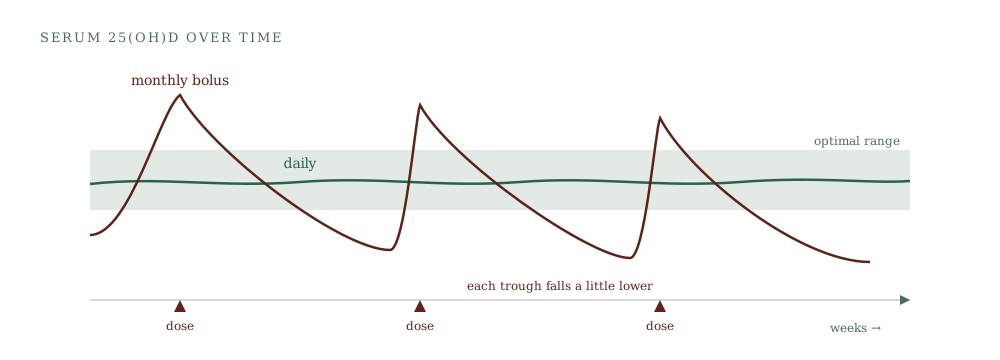
The principle is not specific to vitamin D. Most fat-soluble nutrients and most therapeutic-range nutrient interventions are best handled through consistent, frequent dosing rather than infrequent large boluses. The body is built for steady-state regulation. Bolus dosing fights that architecture; daily dosing works with it.
A reasonable variant on daily dosing is seasonal adjustment. A patient in a tropical climate with regular outdoor exposure may legitimately reduce their dose during seasons of high sun exposure, on the assumption that endogenous synthesis is doing more of the work. The way to handle this is not to guess. It is to test serum 25(OH)D at the seasons of interest and adjust the dose to keep the patient inside their target range across the year. Daily dosing remains the default; the dose is the variable.
Vitamin D does not work alone
This is the part of the conversation that the conventional model omits almost entirely, and that the supplement industry has been slow to integrate even in its functional-medicine-positioned products. Vitamin D is not a standalone molecule. It works in coordination with several cofactors, and a vitamin D protocol that ignores them is delivering a fraction of what the molecule could do — and in some patients, can produce signals of harm that get wrongly attributed to vitamin D itself.
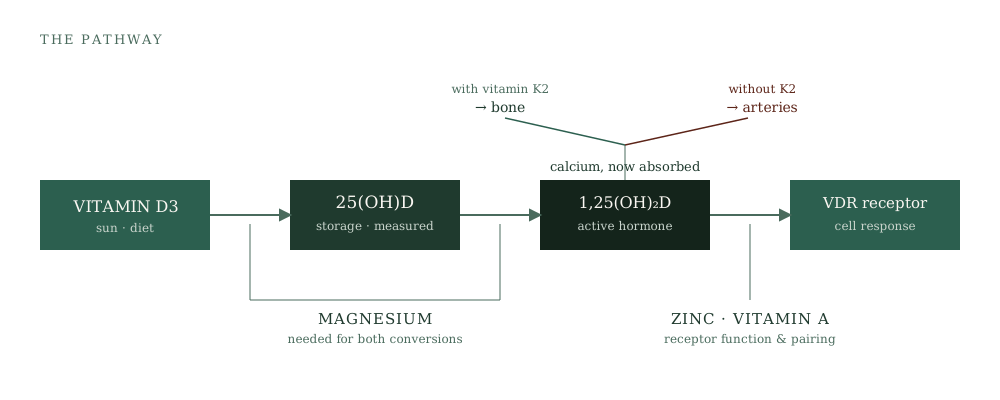
The major cofactors worth understanding are these.
Magnesium
Magnesium is required for the enzymatic conversion of vitamin D into its active hormonal form. Vitamin D is converted twice in the body — once in the liver to 25-hydroxyvitamin D (the form measured in standard labs) and again in the kidneys (and in many other tissues) to 1,25-dihydroxyvitamin D, the active hormone that actually does the clinical work. Both conversion steps require magnesium-dependent enzymes. A magnesium-deficient patient on high-dose vitamin D may have elevated serum 25(OH)D readings on lab results while producing inadequate active hormone at the tissue level. The supplement appears to be working on paper. It is not working in the body. Magnesium-rich diet and supplemental magnesium glycinate or magnesium malate at therapeutic doses are part of any serious vitamin D protocol.
Vitamin K2
Vitamin K2 — particularly in the MK-7 form, with some practitioners also using MK-4 — directs calcium to bone and teeth and away from soft tissue. Vitamin D increases calcium absorption from the gut. Without adequate K2, that absorbed calcium can deposit in arterial walls, soft tissue, and the kidneys rather than going into bone where it is needed. Most of the rare reports of vitamin D toxicity presenting as arterial calcification or kidney stone formation are arguably K2 deficiency cases as much as they are vitamin D excess cases. A vitamin D protocol without K2 is incomplete and, at higher doses, can produce calcium-handling consequences that the patient and their prescriber will misread as vitamin D problems.
Vitamin A
Vitamin A — specifically in the retinol form — works in coordinated balance with vitamin D at the level of gene transcription. Vitamin D and vitamin A both bind to nuclear receptors that pair together (vitamin D receptor with retinoid X receptor), and the activity of one is modulated by the presence of the other. Significantly imbalanced ratios — particularly very high vitamin D with low vitamin A — can produce a different physiological response than balanced supplementation. Most serious clinical protocols ensure adequate vitamin A intake from food sources (liver, egg yolks, full-fat dairy) or modest supplementation, rather than treating vitamin D as a standalone intervention.
Boron
Boron is a less-discussed cofactor that influences vitamin D metabolism, calcium handling, and the half-life of vitamin D in the body. Low boron status can effectively shorten how long vitamin D remains active. Boron is widely available in fruits, vegetables, and nuts in adequate amounts for most patients, but supplementation at modest doses (3 to 6 mg daily) is part of some functional medicine protocols, particularly in patients with documented bone health concerns.
Zinc
Zinc is required for the function of the vitamin D receptor itself. A zinc-deficient patient may have adequate serum 25(OH)D, adequate active hormone, and still produce a sub-optimal cellular response because the receptor cannot do its job efficiently. Zinc deficiency is common in patients on long-term acid-suppressing medications, in vegetarian and vegan diets without careful planning, and in patients with chronic gut inflammation.
The pattern is consistent. Vitamin D depends on a network of cofactors to do its work. A protocol that addresses only the headline molecule is doing partial work and, in some patients, can produce side effects that proper cofactor balance would have prevented entirely. This is one of the cleanest examples of why supplementation done well is more than the sum of its bottles, and why a clinician designing a protocol is not just specifying vitamin D — they are specifying the combination that allows vitamin D to function.
What active monitoring looks like
A daily vitamin D protocol at 4,000 to 8,000 IU is not a fire-and-forget intervention. It is designed to be tracked, and the tracking is what distinguishes responsible therapeutic supplementation from unsupervised self-experimentation.
The basic monitoring panel for a patient on long-term high-dose vitamin D includes:
Serum 25(OH)D — the primary measurement of vitamin D status. Tested at baseline, then again after 8 to 12 weeks of any new dose, then at 3 to 6 month intervals once a stable target is achieved. The goal is to see the patient’s actual position in the 60 to 80 ng/mL target range and adjust the dose if they are above or below.
Serum calcium — to ensure that calcium handling is appropriate. Persistently elevated serum calcium on high-dose vitamin D can indicate either over-supplementation, an underlying condition that affects calcium regulation (primary hyperparathyroidism, certain malignancies, granulomatous disease such as sarcoidosis), or inadequate cofactor balance, particularly K2.
Parathyroid hormone (PTH) — a sensitive indicator of how well the vitamin D and calcium system is functioning. PTH that does not respond appropriately to vitamin D supplementation can flag underlying parathyroid pathology that needs separate attention.
Magnesium status — typically through red blood cell magnesium rather than serum magnesium, because serum magnesium is a poor indicator of cellular magnesium adequacy. RBC magnesium gives a more meaningful read on whether the patient has the cofactor required for vitamin D activation.
This panel is not exotic. It is what serious nutritional medicine does as standard practice for any patient on long-term therapeutic-dose vitamin D. It is also what almost never happens when a patient is given a monthly bolus capsule by a primary care physician and told to come back in a year for a recheck of serum 25(OH)D alone.
Where the upper safety boundary actually sits
A piece that argues for daily 4,000 to 8,000 IU vitamin D needs to address the safety question honestly. There is real toxicity at the high end of vitamin D supplementation, and pretending otherwise would be the kind of cheerleading that costs functional medicine its credibility.
Vitamin D toxicity in the general adult population at 4,000 to 8,000 IU daily is rare. The conventionally-cited tolerable upper intake level set by most regulatory bodies is 4,000 IU per day for adults, but the actual evidence base for clinical toxicity at that level is thin, and most serious vitamin D researchers consider the genuine toxicity threshold to sit substantially higher. Reports of clinically significant hypervitaminosis D in supplementation literature typically involve doses in the tens of thousands of IU daily for prolonged periods, often combined with calcium supplementation and inadequate cofactor balance.
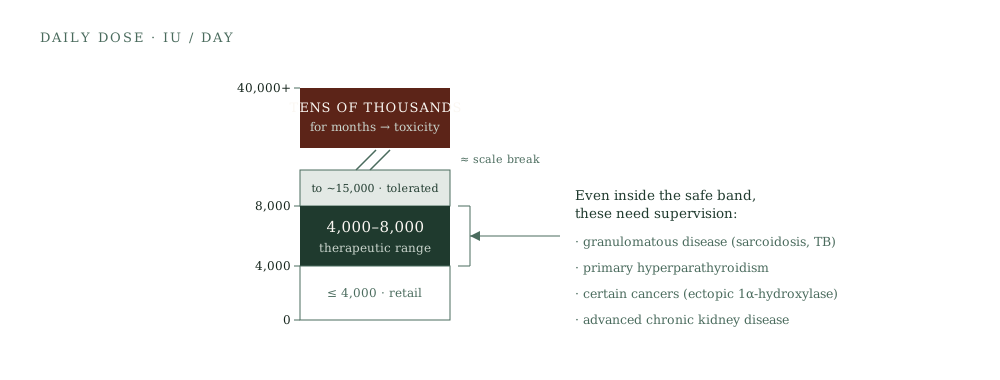
That said, the toxicity is not zero, and certain populations are at meaningfully elevated risk:
Patients with granulomatous disease — sarcoidosis is the classic example, but tuberculosis, certain fungal infections, and some lymphomas also fall in this category — can have ectopic activity of the 1-alpha-hydroxylase enzyme outside the kidney, producing dysregulated active vitamin D and a meaningfully higher risk of hypercalcemia at doses that are completely safe in healthy patients.
Patients with primary hyperparathyroidism can develop dangerous hypercalcemia at vitamin D doses that healthy patients tolerate without issue.
Patients with certain cancers, particularly those associated with ectopic 1-alpha-hydroxylase activity, fall into the same elevated-risk category.
Patients with chronic kidney disease in advanced stages have altered vitamin D handling and require specific protocols rather than standard high-dose supplementation.
These populations are not edge cases the article is including for legal cover. They are the populations in which an unsupervised daily 8,000 IU vitamin D protocol — without baseline labs, without monitoring, without a clinician who knows what to look for — can produce real harm. This is why the framework of this entire series keeps returning to the same conclusion: meaningful nutrient therapy at therapeutic dose is supervised therapy. The dose is not the safety mechanism. The supervision is.
A closing argument
There is something worth saying directly, having now spent two articles on this single nutrient.
Vitamin D, used properly, is one of the most clinically valuable interventions in serious nutritional medicine. The literature connecting vitamin D status to immune function, bone health, mood, cognition, autoimmune modulation, and cardiovascular outcomes is genuinely substantial. The mechanism is well-characterised. The safety profile in the 4,000 to 8,000 IU daily range, with proper cofactors and monitoring, is excellent. The clinical results in patient populations where vitamin D status is part of the picture can be measurable in ways that the patient feels, not just in ways that show up on a printout.
The reason most patients do not experience this is structural. They are taking the wrong dose, in the wrong form, on the wrong schedule, without the cofactors that make the molecule work, without the monitoring that catches what self-prescription cannot. They are being given Tier 1 supplementation and expecting Tier 3 outcomes, or being given Tier 4 bolus protocols designed for institutional logistics rather than patient physiology. Either way, the result is the same: a nutrient that could be doing significant clinical work is not, and the patient concludes that vitamin D does not work much because their experience of vitamin D has not produced much.
That experience is not an indictment of the molecule. It is an indictment of the protocol.
The conversation worth having is with a clinician who can read the pharmacokinetics, the cofactors, the labs, and your specific physiology — and design a protocol calibrated to the goal you are actually trying to achieve. The 4,000 to 8,000 IU daily range, the upper-quadrant serum target, the cofactor stack, the periodic monitoring — none of these are radical claims in clinical functional medicine. They are simply what proper practice looks like. The radical thing is that the public has been kept from this conversation for so long that proper practice now reads as advanced or specialised, when in truth it is the basic competency that the institutional shortcut has been substituting itself for.
Vitamin D, dosed properly, works wonders — particularly for the immune system, where my own decade of clinical observation has been clearest. The reason most people do not see those wonders is that they are not, in any meaningful clinical sense, on vitamin D. They are on a monthly capsule that the institution prescribed for compliance reasons and that their physiology has been quietly ignoring ever since.
The way out is not a different bottle. The way out is the clinical relationship that turns the bottle into a protocol.