Your magnesium came back normal. That may be perfectly true and still not mean what you were told it means, because of how little of your body’s magnesium is in the blood the test measured. Magnesium is one of the most oversold supplements on the shelf and one of the most genuinely useful minerals in the body, and those two facts are not in tension — they are the whole reason the subject needs care. This essay grades what magnesium is actually good for, rung by rung, and marks the exact point where the evidence runs out and the marketing keeps going.
The one per cent problem
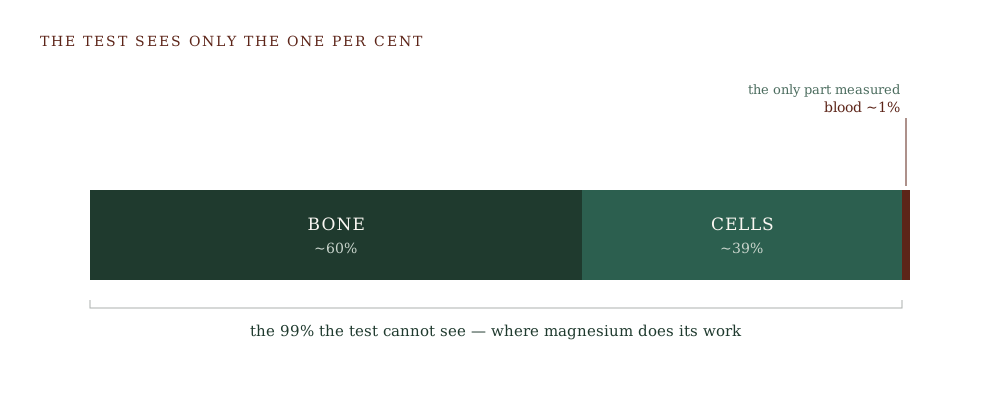
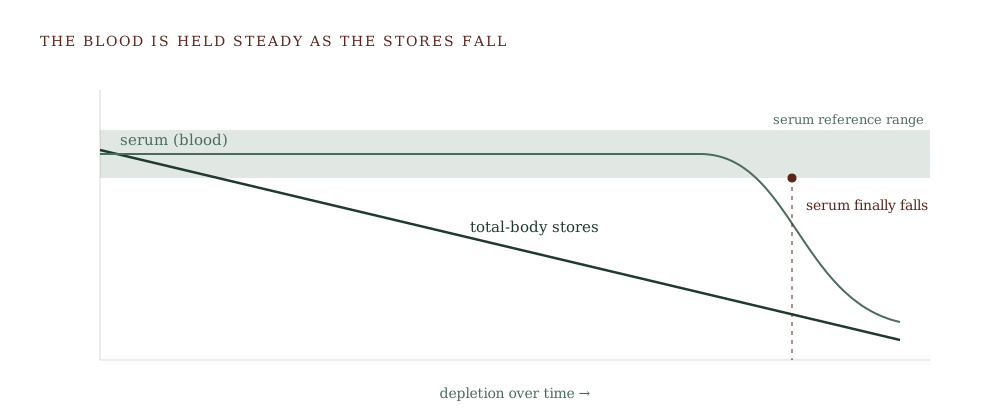
Start with the test, because almost every confusion about magnesium begins there. When a laboratory measures your magnesium, it measures the magnesium in your serum — the liquid part of your blood. But only around one per cent of the body’s magnesium is in the blood at all. The rest is in bone and inside cells, where it does its actual work, and where the blood test cannot see it. The body also guards the serum level tightly, pulling magnesium out of storage to keep the blood concentration steady even as the stores behind it fall. The consequence is documented and specific: a person can lose a fifth to a third of their total-body magnesium before the serum level drops below the reference range.
This does not make the serum test useless — it makes it a particular kind of test, and using it well means knowing which kind. A low serum magnesium is meaningful; it tells you depletion is real and probably significant. But a normal serum magnesium does not rule depletion out. It rules out the severe end and is quiet about the rest. In the language I have used elsewhere about reference ranges, a normal result here is a description of your blood, not a verdict on your stores. That is the single most important thing to understand about magnesium, and, left unhandled, it is also the opening through which a great deal of nonsense enters — because “your normal test is hiding a deficiency” is true often enough to be dangerous in the wrong hands. So let me be precise about where it leads and where it does not.
An honest ladder
Rather than tell you magnesium is good for you, I am going to grade what it is good for, from the best-evidenced use to the worst. The claims get softer as we climb, and I will say so at each rung. That climb is the point: it is how you tell a mineral with real uses from a mineral being sold as an answer to everything.
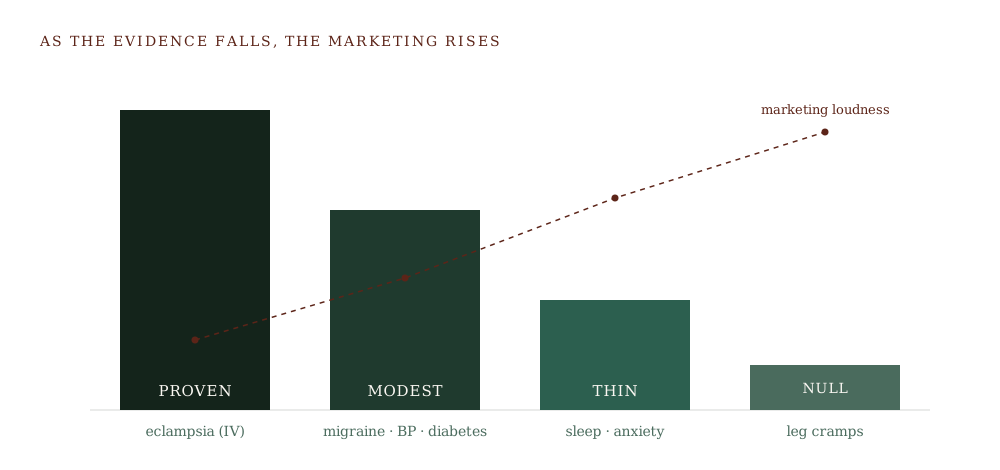
The bottom rung is bulletproof, and it is not a wellness claim at all. Given intravenously, magnesium sulphate roughly halves the risk of eclampsia — the seizures of severe pre-eclampsia that threaten mother and baby. The trial that settled it followed more than ten thousand women across thirty-three countries and cut eclampsia by more than half — a fifty-eight per cent reduction. This is not a supplement-aisle claim; it is obstetric standard of care in every serious health system in the world, and magnesium has similarly established emergency roles in certain dangerous heart rhythms and severe asthma. When people say magnesium is important, this is the ground they are standing on — real, proven, occasionally life-saving, as an intravenous drug given in an emergency. It is worth naming clearly, because everything above it is weaker, and the marketing borrows the authority of this rung to sell the ones higher up.
The next rung is real but modest, and conditional. Taken regularly, magnesium has reasonable evidence for preventing migraine — a professional neurology guideline rates it “probably effective,” which is a calibrated endorsement, not a miracle. It produces small reductions in blood pressure. And in people who both have type 2 diabetes and are genuinely magnesium-deficient, oral repletion has improved insulin sensitivity and glucose control in randomised trials. Notice the condition attached to that last one: the benefit showed up in people who were actually short of magnesium, which is not the same as a benefit for everyone. This rung is where careful nutritional practice lives — worthwhile effects, in the right people, stated at their real size.
The rung above that is thin, and it is the one the bottles shout about. Magnesium is sold today mostly for sleep, anxiety, and general calm. The mechanism is plausible and the idea is appealing, but the human trials are small, short, and mixed, and they do not support the confidence of the marketing. I use magnesium for some of these things in some patients, and I tell them honestly that the evidence here is suggestive, not settled — that we are trying something reasonable, not applying something proven. Anyone who tells you magnesium is a proven treatment for anxiety or insomnia has climbed above the evidence and is hoping you will not notice the rung is missing.
And the top rung is the honest null. Magnesium is marketed heavily for night-time leg cramps, particularly in older adults — and this is the use a careful review of the trials has specifically found it does not help. For idiopathic leg cramps, magnesium performs no better than placebo. Sit with the irony: the mineral is sold hardest, to the people most likely to buy it, for close to the one thing it has been most clearly shown not to do. If you remember nothing else from this essay, remember that the loudest magnesium claim is the emptiest one. That inversion — strongest marketing where the evidence is weakest — is not unique to magnesium. It is how the supplement shelf works, and magnesium is simply an unusually clean example of it.
Who is actually short
The one-per-cent problem is real, but it is not a licence to conclude that everyone is deficient, which is the wellness industry’s favourite next step. Most people eating a reasonably varied diet — leafy greens, legumes, nuts, whole grains — are not meaningfully short of magnesium, and for them a supplement is answering a question they did not have.
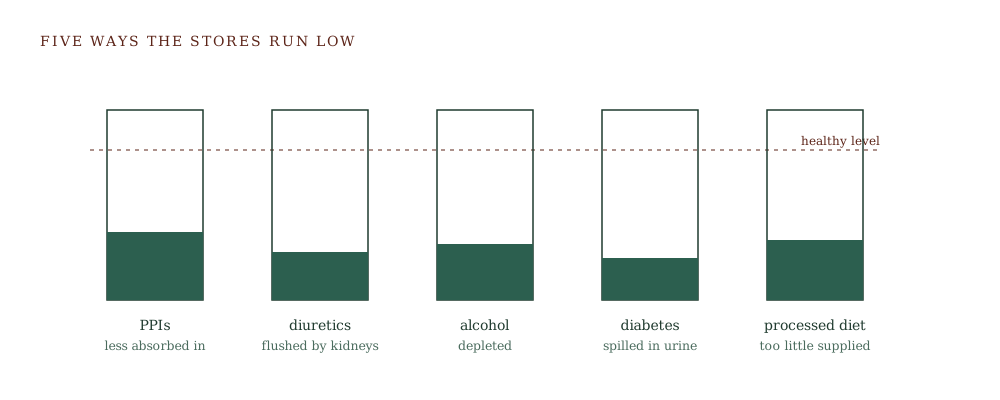
There is, though, a real list of people who genuinely are at risk, and it is worth knowing whether you are on it. Long-term use of proton-pump inhibitors, the common acid-reflux drugs, lowers magnesium absorption. Loop and thiazide diuretics increase how much magnesium the kidneys throw away. Regular alcohol use depletes it. Poorly controlled diabetes spills magnesium into the urine along with the glucose. And a diet built on processed food, low in the plants that carry magnesium, simply does not supply enough. In people like these, repletion is worth pursuing and can matter. In a well-fed person with none of these factors, it usually is not.
This is also where I have to disappoint a particular kind of testing. Because serum magnesium under-detects depletion, it is tempting to reach for a “better” test — a red-blood-cell magnesium, a so-called functional panel — and to build a diagnosis of hidden deficiency on it. I do not do this, and you should be wary of anyone who does, because those tests are better in theory than they are validated in practice: they have not been shown to reliably identify who benefits from repletion, and a more expensive number that no one has tied to an outcome is exactly the kind of surrogate that sells supplements without earning the sale. The honest position is uncomfortable and correct: the standard test is imperfect, the fancier tests are not proven to be better, and the strongest guide we have is not a panel at all but the presence or absence of the actual risk factors above.
Form and dose decide whether it works
Say you are genuinely one of the people who would benefit. The supplement can still do nothing, or do only the wrong thing, if the form and the dose are wrong — and this is where most self-prescription goes quietly astray.
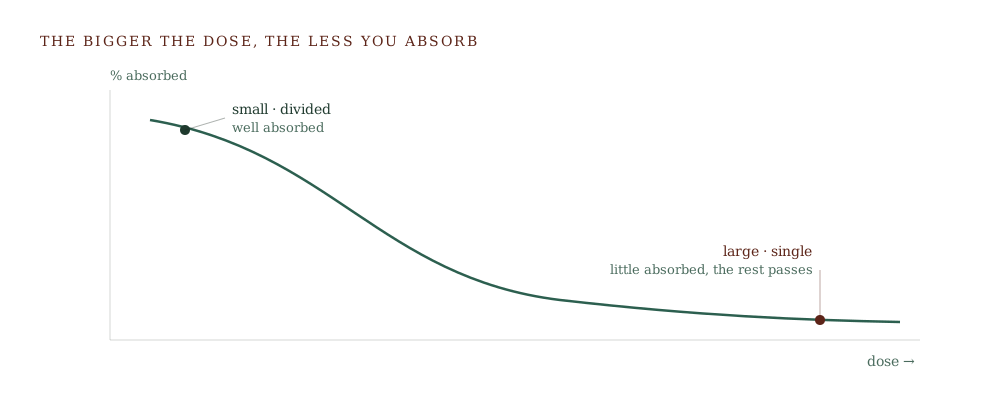
The commonest and cheapest magnesium on the shelf is magnesium oxide, and it is poorly absorbed — so poorly that its main reliable effect is to act as a laxative, drawing water into the bowel while comparatively little magnesium crosses into the body. Better-absorbed forms — citrate, glycinate, malate — deliver more of what you actually took. The dose matters just as much, and in a way that is counter-intuitive: the body absorbs a smaller percentage of a large dose than of a small one, because the absorption pathway saturates. Swallow one big dose and you take up a modest fraction of it and pass the rest, which is why a large single dose is both wasteful and the fastest route to the bathroom. The sensible pattern — for magnesium as for the nutrients I have written about elsewhere — is a modest, well-absorbed dose, divided, in a person who actually needs it, rather than a megadose of oxide taken by someone who does not. Form and dose are not details. They are frequently the whole difference between repletion and an expensive, mildly inconvenient placebo.
What would change my mind
Two findings would move the rungs of that ladder, and it is worth naming them.
If a well-designed trial guided by red-blood-cell or other intracellular magnesium testing showed that repleting people whose serum was normal but whose intracellular level was low produced real clinical benefit, I would revise what I have just said about those tests, and start using them. The reason I do not is not that better tests are impossible in principle; it is that the ones on offer have not yet earned it. Show me that they have and I will change.
And if larger, better trials established that magnesium robustly improves sleep or anxiety — moving those from suggestive to settled — I would promote that rung and say so plainly. I am not committed to magnesium failing there; I am committed to describing the evidence as it currently stands, which is thinner than the marketing. If the evidence thickens, the description should change with it. That is the difference between a position and a belief.
A closing argument
Magnesium is neither the panacea the bottles imply nor the placebo a reflexive skeptic might assume. It is a real mineral, doing real work inside cells the blood test barely sees, with a deficiency that a common diet genuinely produces in an identifiable minority of people — and with a spread of uses that runs from life-saving at the bottom to empty at the top. The entire skill is telling those apart: knowing that the same word covers an intravenous drug that halts seizures and a capsule sold for a symptom it does not touch, and refusing to let the authority of the first be lent to the second.
So the useful version of the advice is not “take magnesium” and it is not “magnesium is a scam.” It is narrower and more useful than either. If you carry the real risk factors, repletion — in an absorbable form, at a sensible divided dose — is worth doing, and may help in ways a normal serum result was never able to exclude for someone with your risk factors. If you do not, the shelf is mostly selling you a reason to worry. The mineral is real. The deficiency is real in some people. Almost everything else on the label is the sound of a genuine thing being sold to people who do not need it, for problems it does not solve.