A snack can solve a practical problem.
Lunch was early. Dinner will be late. There is a gap in the afternoon, and you are hungry.
Lunch was early. Dinner will be late. There is a gap in the afternoon, and you are hungry.
That is a practical reason to think about a snack. You do not need to describe it as a way to speed up your metabolism.
Begin with the gap
Ask what would make the next few hours easier. Something you can carry? Something available near work? Something you enjoy enough to eat again tomorrow?
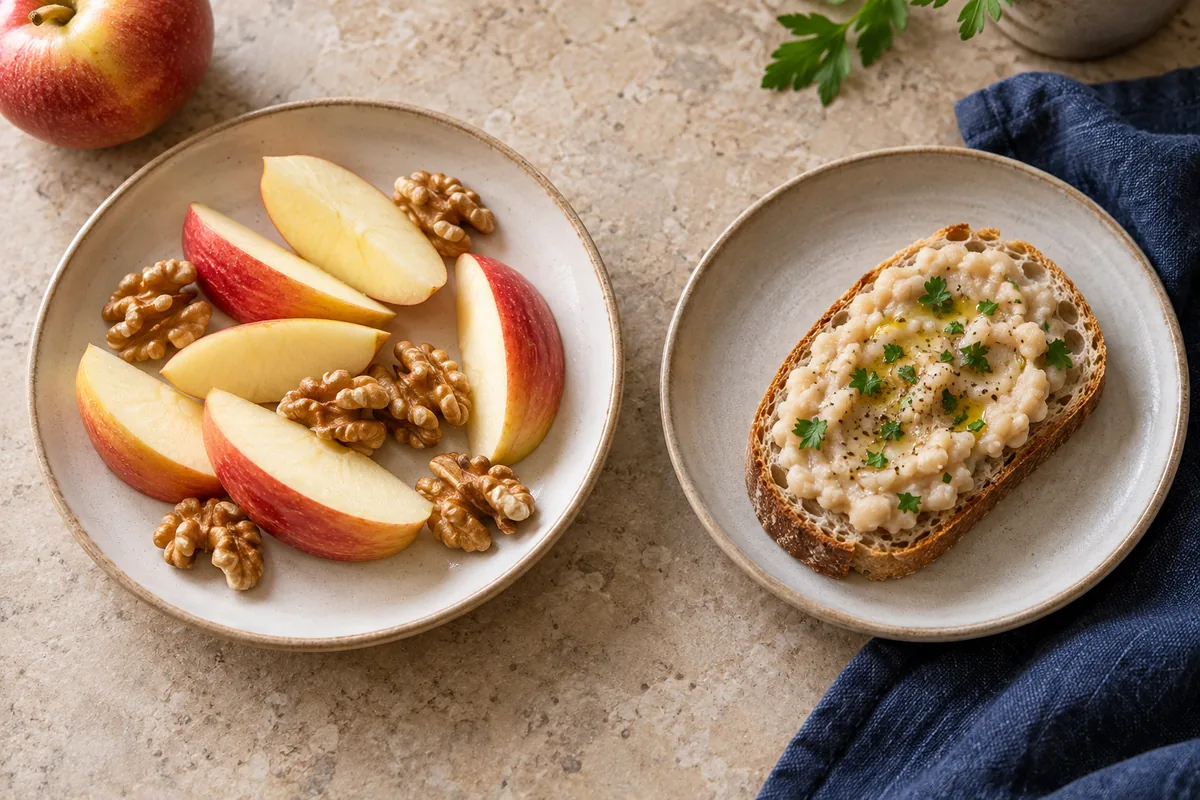
A piece of fruit with a small handful of nuts, some bread with a bean spread, or a serving of soy yogurt could be possibilities. Choose around your appetite, allergies and what is available. These are serving ideas, not kitchen-tested recipes or calculated nutrition plans.
Leave the metabolism promise aside
In a small eight-week trial, sixteen adults completed either three meals or three meals plus three snacks under similar prescribed energy restriction. The groups did not differ significantly in weight loss or appetite measures. That is a limited finding in a particular setting, not proof that meal timing never matters. [1]
It does not give us a reason to promise that extra eating occasions automatically improve metabolism.
You may prefer a snack on a long day and not want one on another. Notice whether it helps, without turning the choice into a daily requirement.
If you have a prescribed meal schedule or glucose-management plan, work within that advice rather than changing it because of a general article.
A useful snack can simply be food that fits the time between meals.
Sources, evidence and limits
Evidence basis: Full archived MBG original read. Cameron et al.2010 randomized trial abstract read in full via indexed PubMed result; direct PubMed page did not render the abstract. No full-paper appraisal. Health Canada varied-eating guidance read for food-group context, not snack efficacy.
Least certain: Best meal frequency for an individual; effects outside a small short energy-restriction trial. Hunger and practical usefulness vary.
Contrary evidence and context: The original itself correctly notes no definitive metabolic boost from grazing. The trial does not rule out advantages of different schedules in other populations or disease-specific care.
What would change the conclusion: Larger appropriate trials or a clinical condition requiring planned snacks could change the advice; a prescribed glucose-management plan takes precedence.
Reading behind this piece
Topic inspiration: How To Snack Strategically For A More Efficient Metabolism — Lea Basch, 2016-10-20. Full archived article body read, including the ending; not a newsletter-only reading.
Original wording for Everyday. A focused evidence check, not a systematic review.