There is a category of medicine that has been growing globally for the past four decades, that has accumulated significant clinical literature, that operates within mainstream institutions like the Cleveland Clinic and Weill Cornell Medicine, that has trained tens of thousands of physicians worldwide, and that most patients have never heard described in a way that lets them understand what it actually is.
The category is nutritional and functional medicine. The reasons most people have not heard it described properly are several, and they will be the subject of subsequent articles in this mini-series. This article is the foundation. It defines what the category actually is, what its intellectual lineage is, what it does clinically, and where it sits in relation to the adjacent categories that the public encounters under different names — integrative medicine, holistic medicine, longevity medicine, precision medicine, complementary and alternative medicine.
This article is also the foundation of every other piece of writing I have published. The clinical specifics — the vitamin C dose, the kidney recovery protocol, the protein restriction critique, the framework of nutrient tiers — all rest on the definitional structure laid out here. If you have read those articles without this one, what follows fills in what was assumed.
The category is also misunderstood in three specific ways that have to be addressed directly. First, the popular use of the term functional medicine has drifted significantly from what the serious clinical category actually means. Second, the category is routinely confused with several adjacent categories that overlap but are not identical. Third, almost every existing public definition was written by Western institutions for Western audiences, treating the modality as if it emerged primarily from American intellectual sources, which is historically incomplete. This article addresses all three problems explicitly.
What nutritional medicine is
Nutritional medicine, in its serious clinical form, is the application of nutritional science to the treatment and prevention of disease at therapeutic rather than maintenance dose levels. The category is older than functional medicine. Its intellectual foundations were laid in the 1940s and 1950s, primarily by an American biochemist named Roger J. Williams, who is one of the most consequential nutrition scientists of the twentieth century and whose name very few patients have ever encountered.
Williams was a working biochemist before he was a public figure. He discovered pantothenic acid, named folic acid, and directed the Clayton Foundation Biochemical Institute at the University of Texas through what was, by published count, the most productive period of vitamin discovery any single laboratory has produced. In 1947 he published the foundational concept that would become the intellectual core of nutritional medicine — biochemical individuality. The argument, condensed, is that nutritional requirements vary substantially between individuals because of genetic, anatomical, and physiological differences, and that the population averages used to set recommended intake levels do not adequately serve patients whose individual requirements deviate from those averages. He developed this argument across multiple decades, culminating in the 1956 book Biochemical Individuality: The Basis for the Genetotrophic Concept, which remains in print and which Linus Pauling, Jeffrey Bland, and many other figures who shaped contemporary nutritional medicine cited as foundational to their own thinking.
What follows from Williams’s argument is the structural premise of nutritional medicine: that the dose matters, that the dose varies between individuals, and that the dose required for therapeutic effect is often substantially higher than the dose required to prevent named deficiency disease. The tiered framework I have described in earlier articles — RDA-level intake, intake adequate to prevent disorder, intake adequate for optimal function, therapeutic-dose intake — is the contemporary clinical articulation of Williams’s argument. It is not a recent innovation. It is the practical clinical form of a question Williams was asking publicly seventy years ago.

The line of intellectual transmission from Williams to contemporary clinical practice runs through several specific figures. Linus Pauling formalised much of the orthomolecular tradition in the 1960s and 1970s, including his foundational 1974 Proceedings of the National Academy of Sciences paper questioning whether the recommended daily allowance for vitamin C was adequate. Abram Hoffer applied the orthomolecular framework to psychiatric medicine across decades of clinical practice. Jonathan Wright pioneered laboratory-based clinical nutrition through his Tahoma Clinic. And Alan Gaby — Yale undergraduate, biochemistry master’s degree from Emory, MD from the University of Maryland, past president of the American Holistic Medical Association — produced what most serious clinicians in the field consider the definitive reference textbook of contemporary nutritional medicine. His 2011 work Nutritional Medicine, a thirty-year project drawing on more than forty-five thousand peer-reviewed research studies and covering more than four hundred clinical conditions across sixty-one chapters on individual therapeutic agents, remains the most comprehensive single-author treatment of the discipline in print. Gaby gave expert testimony to the White House Commission on Complementary and Alternative Medicine on the cost-effectiveness of nutritional supplements. He served as professor of nutrition at Bastyr University from 1995 to 2002. He was contributing medical editor of the Townsend Letter for Doctors across four decades. His scholarly output is the bridge between Williams’s foundational concepts and the contemporary clinical practice that integrates nutritional medicine with functional medicine and broader integrative care.
The UK developed its own intellectual and clinical lineage in nutritional medicine, partly in parallel with and partly distinct from the American institutional development. Lawrence Plaskett — Cambridge-trained biochemist, PhD from University College Hospital Medical School in London, formerly Lecturer in Medical Biochemistry at Edinburgh University Medical School with a specialisation in thyroid biochemistry — moved from orthodox academic biochemistry through industry research into integrative clinical practice and education across the 1970s and 1980s. In 1982, he established the first nutritional medicine training college in the United Kingdom, integrating biochemistry, pathology, toxicology, pharmacology, naturopathy, and Chinese medicine into a single clinical curriculum. His college trained over seven hundred practitioners, his courses are now licensed to colleges worldwide, and his published output across his career includes approximately eighty research papers, patents, and clinical reports. Plaskett’s significance is structural: he was integrating Western biochemistry with Asian medical traditions in clinical practice in the UK forty years before such integration became fashionable in American functional medicine institutions. He also represents the practitioner-pioneer strand of UK nutritional medicine — figures who held mainstream academic credentials but moved into the integrative clinical territory because the conventional system did not adequately address what their clinical work required.
The fact that most patients have never heard of Williams, Pauling, Hoffer, Wright, Gaby, or Plaskett — despite their collective contribution to the intellectual foundation of a discipline now practised at Cleveland Clinic and Weill Cornell — is itself part of the problem this mini-series addresses. The discipline has serious intellectual ancestors. They are not the figures the public has encountered through wellness marketing.
Nutritional medicine, as a clinical practice, takes Williams’s framework seriously. It treats nutritional intervention as a category of therapeutic medicine that can be calibrated to patient-specific need, monitored through laboratory and clinical markers, adjusted over time, and integrated with conventional pharmaceutical care where appropriate. It is not the same as nutrition counselling. It is not the same as dietary recommendation. It is the application of nutritional pharmacology to clinical questions, with the rigour and individualisation that any serious therapeutic discipline requires.
What functional medicine is
Functional medicine, in its formal institutional sense, was named and defined by the American biochemist Jeffrey Bland in 1990, and the Institute for Functional Medicine (IFM) was founded by Jeffrey and Susan Bland in 1991 in the United States. Bland was a student and intellectual descendant of Roger Williams’s nutritional science tradition. The institute he founded codified and extended what Williams had begun, and added to it a systems-biology framework drawn from contemporary advances in molecular medicine, genomics, and chronic disease research.
The Institute for Functional Medicine, at founding, identified seven defining characteristics of the discipline. Patient-centred rather than disease-centred. Systems-biology approach focused on web-like physiological interconnections. Dynamic balance of gene-environment interactions. Personalised based on biochemical individuality. Promotion of organ reserve and sustained healthspan. Health understood as positive vitality rather than mere absence of disease. Function-focused rather than pathology-focused. These seven characteristics remain the formal definition of the discipline as IFM teaches and practices it.
What this means in clinical practice is straightforward to describe and harder to do well. Functional medicine treats the patient as an integrated system whose presenting symptoms are downstream of upstream dysfunction in one or more interconnected physiological networks. Rather than diagnosing the symptom and prescribing the symptom-targeted intervention, the functional medicine practitioner asks why the dysfunction has emerged — what genetic, environmental, nutritional, lifestyle, microbiome, hormonal, or inflammatory factors have combined to produce the clinical picture in this specific patient. The treatment protocol then addresses the upstream factors rather than only the downstream symptom. The intervention typically combines nutritional therapy, lifestyle modification, environmental adjustment, targeted supplementation, mind-body modalities, and pharmaceutical agents where genuinely indicated, calibrated to the individual patient’s biochemistry and clinical context.

The Institute for Functional Medicine has, since 1991, trained tens of thousands of physicians worldwide, established collaborations with major academic medical centres including the Cleveland Clinic and Weill Cornell Medicine, accumulated a substantial body of clinical research and case documentation, and become the principal global institutional anchor for the discipline. The Cleveland Clinic Center for Functional Medicine, established in 2014, is currently directed by Mark Hyman and represents the most prominent institutional integration of functional medicine into a major academic hospital system.
The discipline has also been the subject of significant institutional resistance, including the American Academy of Family Physicians’ published finding, via the Commission on Continuing Professional Development’s literature review, that the functional medicine evidence base is insufficient and that some claims in the discipline are potentially dangerous — a finding reported in the Annals of Family Medicine and reflected in the AAFP’s restriction of CME credit for functional medicine training. The pattern of institutional resistance is real, is not new, and will be the central subject of a subsequent article in this mini-series. Whether the resistance reflects the substantive clinical evidence or the structural incentives of the conventional medical institutions that articulate it is the question the keystone article in this series takes up in full.
Parallel institutional development across three continents
Functional medicine is not the only institutional structure that emerged in the early 1990s to formalise this clinical approach. The American Academy of Anti-Aging Medicine (A4M) was founded in 1991-1993 by Ronald Klatz and Robert Goldman, and grew to encompass a globally distributed membership of physicians, dentists, and other healthcare practitioners across more than one hundred countries. A4M’s intellectual focus differs from IFM’s in emphasis — where functional medicine has centred on chronic disease and root-cause analysis, A4M has centred on biological aging, hormonal optimisation, regenerative interventions, and longevity-oriented preventive care — but the two institutions overlap substantially in their underlying clinical philosophy and in their shared commitment to systems-biology thinking, biochemical individuality, and integrative therapeutic approaches. A4M offers the Fellowship in Anti-Ageing, Regenerative and Functional Medicine, a structured postgraduate certification programme that has trained physicians, dentists, naturopaths, pharmacists, and other healthcare practitioners in the integrated discipline. Its Metabolic Medical Institute provides advanced training specifically in longevity medicine and metabolic resilience.
A4M’s institutional position is more contested than IFM’s. The American Board of Medical Specialties does not currently recognise anti-aging medicine as a formal medical sub-specialty, and the mainstream gerontology research community has, in published commentary, been openly critical of A4M’s positioning of anti-aging as a clinical discipline. These institutional tensions are real, are not hidden, and reflect the broader pattern of institutional resistance that this mini-series will examine in its keystone article. What is also real is that A4M has trained tens of thousands of credentialed physicians worldwide, that its Fellowship programme is structured around contemporary biochemistry and clinical medicine, and that the practitioners who hold its certifications operate within a defined educational and clinical framework. The honest description of A4M’s position is that it sits in genuinely contested institutional territory — a category of medicine that mainstream institutional structures have not formally recognised but that operates with substantial international clinical infrastructure and a coherent intellectual framework.
Across the same period, the UK developed academic-institutional anchoring of nutritional medicine through mainstream university structures. Margaret Rayman — Oxford doctorate in Inorganic Biochemistry from Somerville College, post-doctoral fellowships at the Institute of Cancer Research and Imperial College, Professor of Nutritional Medicine at the University of Surrey since 2007 — established the MSc Programme in Nutritional Medicine at Surrey in 1998. The programme remains the only MSc in Nutritional Medicine offered at any UK university and has been running for over twenty-five years. Rayman’s research output, focused particularly on the trace elements selenium and iodine in human health, includes randomised controlled trials published in mainstream journals including Thorax and the British Journal of Nutrition, and highly cited reviews in The Lancet. She holds a Visiting Professorship at the First Affiliated Hospital, Xi’an Jiaotong University School of Medicine in China — a credential that signals the increasing institutional integration between UK nutritional medicine and Asian academic medicine. Rayman’s significance is institutional: she demonstrates that nutritional medicine, in its serious academic form, has formal anchoring in mainstream UK university medicine, not just in alternative-health institutions or commercial wellness training programmes.
The Malaysian institutional architecture
The Malaysian institutional pathway for nutritional and functional medicine has been pioneered, across the past two decades, by Dato’ Sri Steve Yap. His credentialing reflects the same multi-source pattern that defines serious training in this field — a Master’s in Metabolic and Nutritional Medicine from the University of South Florida’s Morsani College of Medicine, a Master’s in Evidence-Based Healthcare from the University of Oxford’s Graduate School of Evidence-Based Medicine and Research, an MBA from the University of Durham, fellowships in Integrative Cancer Therapies and in Anti-Ageing, Regenerative and Functional Medicine through A4M in the United States, and board certifications in nutritional medicine and anti-ageing medicine awarded with Distinction by the World Society of Interdisciplinary Anti-Ageing Medicine in Paris. He holds documented Southeast Asian firsts in three categories — first to hold a Master’s degree in Metabolic Medicine, first to achieve a medical fellowship in anti-ageing and regenerative medicine, and first to earn a medical fellowship in integrative cancer therapy — and has served on technical committees within both the Malaysian Ministry of Health and the Ministry of Higher Education across more than a decade, including as a current member of the Traditional and Complementary Medical Council established under the T&CM Act 2016.
The institutional architecture Steve Yap built in Malaysia is structured around two distinct bodies serving complementary functions. The Association of Nutritional and Functional Medicine Practitioners Malaysia (ANFMPM) is the governing professional body and the board-certifying authority for NFM practitioners in this country. It is a member of the Federation of Complementary and Natural Medical Associations Malaysia (FCNMAM), of which Steve Yap is also President, and which is recognised by the Malaysian Ministry of Health as the federal-level umbrella body for complementary and natural medical associations in the country. The educational pathway that leads to ANFMPM board certification has been developed jointly with University Yayasan Pahang (formerly University College of Yayasan Pahang), where Steve Yap holds an Adjunct Professorship at the Faculty of Science, Engineering and Agrotechnology. The qualifying pathway includes three progressive university-awarded qualifications — a Postgraduate Certificate in Nutritional Medicine, a Postgraduate Diploma in Nutritional Medicine, and a Professional Masters in Complementary Medicine specialising in Nutritional Medicine.
The combination of ANFMPM as professional body, FCNMAM as federal-level federation, and the University Yayasan Pahang accreditation as academic anchor represents the most substantial institutional development of nutritional and functional medicine in Southeast Asia. Steve Yap’s contribution is therefore both pedagogical and structural — he brought serious nutritional medicine from the UK into Malaysia, founded DSY Wellness and Longevity Centre in 2002, one of the earliest dedicated evidence-based complementary medical wellness centres in Southeast Asia, built the structured route through which Malaysian practitioners can train into NFM with formal qualifications and professional recognition, and continues to chair the institutional structures that have produced the contemporary generation of Malaysian NFM practitioners. My own clinical formation began under his direct mentorship at DSY Wellness in 2013 upon completing my undergraduate training at Monash, and my Malaysian credentialing is anchored in the institutional architecture he built.
Why nutritional and functional medicine are practised together
The combination is not arbitrary. It is structural. Nutritional medicine and functional medicine address different but adjacent questions in clinical practice, and the practitioner trained in only one of them has a meaningfully incomplete toolkit.
Nutritional medicine, used alone, can address specific nutrient deficiencies, optimise specific biochemical pathways, and deliver therapeutic-dose interventions calibrated to individual biochemistry. What it does not, by itself, fully provide is the diagnostic framework for understanding why a patient’s nutrient status is what it is, why their particular constellation of symptoms has emerged, and what upstream factors across multiple systems are producing the clinical picture. A practitioner working only in nutritional medicine can deliver excellent dose-response interventions but may miss the systems-level diagnostic question.
Functional medicine, used alone, provides the systems-level diagnostic framework but is not, by itself, sufficient training in nutritional pharmacology to deliver therapeutic-grade nutritional intervention. A practitioner working only in functional medicine can identify the upstream dysfunction with sophistication but may treat it with intervention protocols that are technically correct in concept but suboptimally calibrated in dose, form, timing, and individual cofactor support.
Combined, the two disciplines form a clinical practice that asks the systems-level question, identifies the upstream factors, and then treats them with nutritional and lifestyle intervention calibrated to the rigour that nutritional pharmacology actually requires. This is what serious clinical practice in this category looks like. It is not nutrition advice combined with general wellness coaching. It is integrated systems-biology diagnosis combined with therapeutic-grade nutritional pharmacology, and it requires substantial training in both halves.

The combination of these institutional structures — IFM training originating in the United States, A4M Fellowship training also from the US, postgraduate work through the Plaskett tradition and the Surrey MSc in the UK, and the ANFMPM-anchored qualifying pathway through University Yayasan Pahang in Malaysia — represents what comprehensive formation in contemporary NFM actually looks like. My own training reflects this multi-source formation. The MSc in Nutritional Medicine through the University of Surrey under the programme that Margaret Rayman established. Postgraduate training in Complementary Medicine, Nutritional Medicine through the University Yayasan Pahang pathway pioneered by Dato’ Sri Steve Yap, leading to the Professional Masters degree awarded by the university. Fellowship training in Anti-Ageing, Functional and Metabolic Medicine through A4M in the United States. Board certification through the Association of Nutritional and Functional Medicine Practitioners Malaysia, the professional body Steve Yap founded and chairs. Direct clinical mentorship under Steve Yap at DSY Wellness and Longevity Centre across the early years of my practice. This three-continent training, anchored in named pioneers across each tradition, is not unusual in serious NFM practice. It reflects what comprehensive training actually requires, because no single national tradition or single institution currently houses the full intellectual and clinical scope of the discipline.
The Asian intellectual lineage that Western histories typically erase
Most public definitions of nutritional and functional medicine, including most of the institutional definitions, treat the category as if it emerged primarily from twentieth-century American biochemistry. Williams, Pauling, Bland, IFM. This is incomplete in a way that matters intellectually and that matters particularly for any reader in Asia trying to understand what the category actually is.
The intellectual core of NFM — the proposition that each patient is a unique biochemical individual whose treatment must be calibrated to their specific constitution, environment, and clinical state — is not a twentieth-century discovery. It is a re-articulation of a clinical principle laid out in the foundational texts of Asian medicine: the Huangdi Neijing, the Charaka Samhita, and Yi Je-ma’s Dongui Suse Bowon.
Traditional Chinese Medicine, codified principally in the Huangdi Neijing, operates from the premise that health emerges from a dynamic balance specific to each individual, and that disease emerges when that balance is disrupted by factors specific to that person — their constitution, their environment, their emotional state, their history, their current physiological condition. The peer-reviewed published literature describes the practice clearly: TCM primarily emphasises individualised assessment of patients and personalised treatment. The clinical practice of TCM, when properly executed, has never operated from population averages. It has always operated from the assessment of the individual patient as a unique system.
Ayurveda, codified principally in the Charaka Samhita, articulates the same principle in different vocabulary. The Ayurvedic concept of prakriti (innate constitution) and vikruti (current state of imbalance) is essentially a pre-biochemical articulation of biochemical individuality and the dynamic gene-environment interaction. Ayurveda explicitly recognises that the same disease may require different therapeutic approaches in different patients depending on their individual constitution, and that nutrition is one of the central modalities through which clinical balance is restored. The peer-reviewed literature comparing Ayurveda and TCM notes that both systems share, with classical Greek medicine, the foundational insight that health and disease are not standardised states — that every individual is the unique product of physical, psychological, environmental, and developmental factors.
Sasang Constitutional Medicine, formalised by Yi Je-ma in his 1894 Dongui Suse Bowon, makes biochemical individuality even more explicit, formally classifying patients into constitutional types each requiring distinct therapeutic approaches. Traditional Malay medicine, traditional Indonesian jamu, traditional Vietnamese medicine — across the region, the foundational principle is consistent: clinical practice must be individualised, must integrate nutritional and lifestyle factors with herbal and mind-body intervention, and must understand disease as the downstream consequence of upstream imbalance.
When Roger Williams formulated biochemical individuality in 1947, he was articulating in the language of mid-twentieth-century biochemistry a clinical principle laid out in the Huangdi Neijing and the Charaka Samhita, made systematic by Yi Je-ma in 1894, and articulated in different vocabulary in the Hippocratic corpus. When Jeffrey Bland founded IFM in 1991 with seven defining characteristics centred on patient-centred, systems-oriented, individualised care, he was institutionalising in twentieth-century American medical idiom a clinical philosophy that those texts had already institutionalised in their own. Lawrence Plaskett’s integration of biochemistry and Chinese medicine in his UK clinical training college in 1982 was, in this longer historical view, a Western practitioner formally combining a contemporary biochemistry framework with the clinical tradition codified in the Huangdi Neijing.
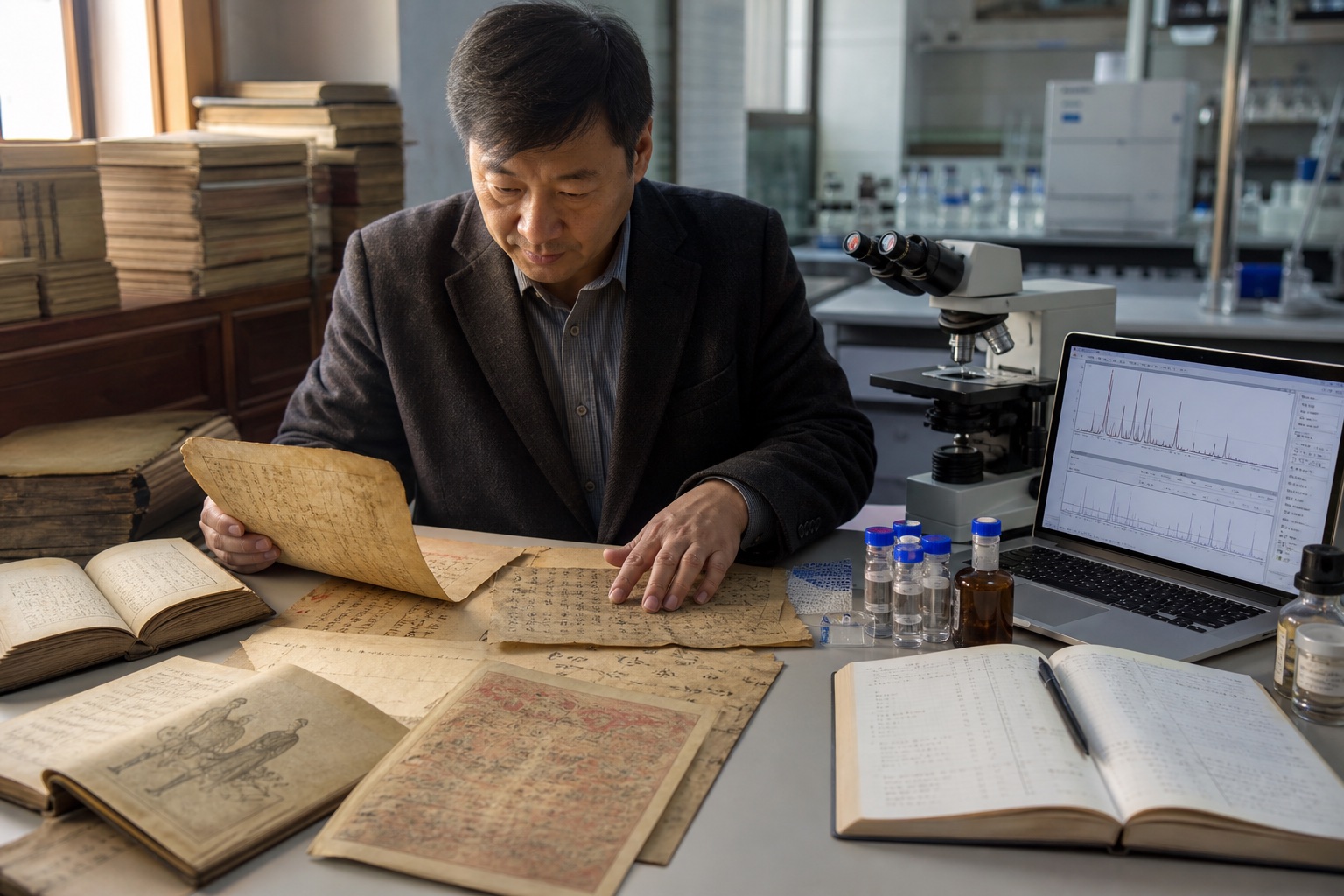
This is not to claim that contemporary NFM is identical to TCM or Ayurveda. It is not. The biochemical specificity, the laboratory-driven individualisation, the systems-biology framework drawing on genomics and metabolomics, the integration with contemporary pharmaceutical pharmacology — these are genuinely contemporary additions to the clinical toolkit. What is not contemporary is the underlying philosophical and clinical framework. That framework is older than Western biochemistry, and intellectually rooted in the texts that span the major Asian medical traditions.
The clinical implication, particularly for Asian readers, is that NFM is not a foreign import from American wellness culture. It is the modern biochemical articulation of a clinical philosophy this region originated and continues to practise. Recognising this changes how the category should be understood — not as something introduced from outside that Asia is just catching up to, but as something Asia originated, that Western biochemistry has formalised and extended, and that contemporary Asian clinical practice has the intellectual foundation to integrate with particular depth.
Where NFM sits in relation to adjacent categories
A reader encountering NFM for the first time often encounters it alongside several adjacent categories that overlap in clinical practice but are not identical. The terms used most commonly are integrative medicine, holistic medicine, complementary and alternative medicine (CAM), lifestyle medicine, precision medicine, and longevity medicine. The distinctions matter.
Integrative medicine is the broadest of these terms and refers, in mainstream institutional usage, to the practice of combining conventional Western medical care with evidence-supported complementary modalities — acupuncture, mind-body practices, nutritional intervention, manual therapies, and others. It is institutionalised in academic medical centres including the Andrew Weil Center for Integrative Medicine at the University of Arizona and the Osher Center networks at multiple US universities. NFM practitioners are typically integrative in this sense, but integrative medicine as a category is broader than NFM and includes practitioners who do not work primarily in nutritional or systems-biology frameworks.
Holistic medicine is an older and less institutionally defined term that emphasises treating the whole person — physical, emotional, social, spiritual — rather than only the symptom. It overlaps with integrative medicine and with NFM but is less specific about clinical methodology and more variable in its evidentiary standards.
Complementary and alternative medicine (CAM) is the broadest umbrella term and includes everything from acupuncture and herbalism to homeopathy, energy medicine, and traditional medical systems. CAM as a category is too broad to be clinically meaningful — it groups practices with strong evidentiary support alongside practices with little or none. NFM is, technically, a subset of CAM in the way the term is often used institutionally, but the grouping obscures more than it clarifies.
Lifestyle medicine is a more recent category, formally institutionalised through the American College of Lifestyle Medicine, that focuses on the use of evidence-based lifestyle interventions — nutrition, physical activity, stress management, sleep, social connection, avoidance of risky substances — to prevent and treat chronic disease. Lifestyle medicine overlaps significantly with NFM but is typically narrower in its therapeutic toolkit, less focused on biochemical individualisation, and less engaged with therapeutic-dose nutritional intervention.
Precision medicine refers to the use of individual-level genetic, environmental, and lifestyle data to personalise diagnosis, treatment, and prevention. Precision medicine is institutionalised in mainstream academic medicine, including significant programmes at the National Institutes of Health and major academic medical centres. The relationship between precision medicine and NFM is interesting: precision medicine, in its mainstream form, applies the individualisation principle within conventional pharmaceutical and therapeutic frameworks, while NFM applies the same principle but extends the therapeutic toolkit to include nutritional pharmacology, lifestyle intervention, and integrative modalities. The intellectual logic is the same. The clinical scope is different.
Longevity medicine is the most recently emerged of these categories and the most rapidly evolving. The Lancet Healthy Longevity published a foundational definitional paper on the field in 2021, describing longevity medicine as advanced personalised preventive medicine powered by deep biomarkers of aging and longevity. Major institutional anchoring is emerging in Geneva, Singapore, London, and increasingly in the United States. The relationship between longevity medicine and NFM is the closest of all the adjacent categories. Longevity medicine, in its serious clinical form, draws heavily on functional medicine’s systems-biology framework, on nutritional medicine’s therapeutic-dose toolkit, and on integrative medicine’s modality breadth. It adds to these a specific focus on biological aging biomarkers, geroscience, and interventions targeted at aging biology itself. Singapore clinics increasingly position themselves as combined functional medicine and longevity practices, recognising the substantial overlap. The categories are converging more than they are diverging, and the differences are increasingly commercial and credentialing-related rather than intellectually substantive. A practitioner trained deeply in NFM has most of the clinical toolkit longevity medicine deploys; a practitioner trained primarily in longevity medicine typically has at least the foundational elements of NFM. The boundary, in 2026, is real but porous.
The reader who is trying to make sense of all these categories without getting lost in branding can use a simpler heuristic. Does the practice use systems-biology thinking to identify upstream drivers of disease? Does it use nutritional and lifestyle intervention as primary therapeutic tools? Does it individualise treatment based on the specific patient rather than population averages? Does it integrate conventional pharmaceutical care where genuinely indicated rather than rejecting it? Practices that answer yes to all four are operating in the NFM intellectual tradition regardless of what they call themselves. Practices that answer yes to fewer are doing something adjacent but not identical.

What NFM is not
Three things are worth naming explicitly because the public confusion about them is significant.
NFM is not anti-pharmaceutical medicine. Serious NFM practice integrates conventional pharmaceutical care where it is genuinely the best clinical option for the patient. The ACE inhibitor for the patient with established hypertension and microalbuminuria. The metformin for the patient with insulin resistance who needs immediate glycemic control while upstream metabolic correction is in progress. The thyroid hormone replacement for the patient with established autoimmune thyroid disease. NFM does not reject pharmaceutical intervention. It contextualises pharmaceutical intervention within a broader clinical framework that asks why the dysfunction emerged and what upstream correction can complement or eventually reduce the pharmaceutical need.
NFM is not naturopathy. Naturopathy is its own distinct clinical tradition with its own intellectual history, training pathways, and licensing structures. There is overlap in modalities — both use nutritional intervention and lifestyle modification — but the frameworks, the credentialing, and the clinical scope are different. Some NFM practitioners are also trained naturopaths; many are not.
NFM is not the consumer wellness industry. The wellness industry has appropriated NFM vocabulary — root cause, personalised, functional — to market everything from celebrity diet plans to direct-to-consumer supplement subscriptions to influencer-led detox protocols. This appropriation has done significant damage to public understanding of what serious NFM practice actually is. The clinical category has formal training pathways, board certifications, peer-reviewed literature, institutional integrations with major academic medical centres, and clinical protocols developed through decades of practice and refinement. The wellness industry version is not the same thing. The reader who has only encountered NFM through the latter has not yet encountered the former.
A closing argument
Nutritional and functional medicine, in its serious clinical form, is a discipline with a substantial intellectual history, a formal institutional structure, an accumulating evidence base, and a clinical practice that integrates systems-biology diagnosis with therapeutic-grade nutritional and lifestyle intervention. Its intellectual lineage extends from contemporary biochemistry through Roger Williams’s mid-twentieth-century work, through Alan Gaby’s exhaustive textbook synthesis, through Lawrence Plaskett’s UK clinical pioneering, through Margaret Rayman’s UK academic anchoring, through Dato’ Sri Steve Yap’s pioneering of the Malaysian institutional pathway and the ANFMPM-University Yayasan Pahang training architecture, back through the foundational texts of Asian medicine whose articulation of biochemical individuality preceded the Western biochemistry that re-articulates it.
What it is not is a fad, a marketing label, or a fringe alternative to mainstream medicine. The major academic institutions that have integrated functional medicine into their clinical structures — Cleveland Clinic, Weill Cornell — did so on the basis of clinical evidence and patient outcomes. The University of Surrey has run its postgraduate MSc in Nutritional Medicine for over twenty-five years. The Malaysian institutional architecture, anchored by ANFMPM and University Yayasan Pahang, has produced the contemporary generation of credentialed NFM practitioners in this country. The boundary between NFM and the most rapidly emerging adjacent categories, particularly longevity medicine and precision medicine, is increasingly porous. The intellectual foundation that NFM rests on is becoming, slowly, the foundation of where contemporary medicine more broadly is moving.
What the public has encountered, in most cases, is not this. The public has encountered popularised, commercialised, and sometimes oversimplified versions of the category, mediated by wellness marketing and celebrity practitioners whose work bears partial but not complete resemblance to serious NFM clinical practice. The category that has been built carefully across four decades — and across the foundational texts of Asian medicine that preceded it — is more substantial than what most readers have been shown.
Subsequent articles in this mini-series will address the questions that follow from this foundation. Why has Asia, despite originating much of the intellectual tradition that NFM rests on, not heard of the contemporary clinical category? Why has conventional allopathic medicine reacted to NFM with the resistance it has? Why is this discipline the future of where health and wellness practice is going, and how does it relate to the adjacent categories that the public encounters under different names?
These are not questions that can be answered briefly. They require the same kind of careful, evidence-anchored, structurally argued treatment that this article has attempted for the foundational definitional question. Each one is a piece of work in its own right. Together, they are the intellectual architecture that the rest of my writing rests on, and that the patient deciding whether to engage with this category of care deserves to be able to read for themselves.
The category exists. It is older and more rigorous than the public is generally told. It is also genuinely different from the conventional medicine the public has been raised on, in ways that matter. The next four articles in this mini-series explain why those differences exist, why they have been obscured, and why they matter for the future of how medicine is practised.
This is the foundation.