A patient comes into clinic. They are in their late fifties. They have had type 2 diabetes for fifteen years, controlled imperfectly. Their blood pressure is on three medications. They carry an extra twenty kilograms they have not been able to lose. Six months ago, their family doctor noticed their estimated glomerular filtration rate had dropped to fifty-two. Three months ago, microalbumin appeared in their urine. They were referred to a nephrologist, who confirmed Stage 3 chronic kidney disease, started them on an additional medication, scheduled them for follow-up in three months, and gave them the standard message.
The goal is to slow the decline. Continue your current medications. Watch your protein intake. We will monitor closely. If things progress, we will discuss dialysis options when the time comes.
The patient understood. They had a friend who had gone through this trajectory — declining kidney function, more medications, more visits, eventually three days a week on a dialysis machine, then a transplant list, then quiet decline. The patient had watched it happen. They left the nephrologist’s office and did what most patients do in this situation. They stopped expecting things to get better. They began the slow internal process of accepting what felt inevitable.
This article is for that patient.
It is for the patient whose nephrologist has done exactly what their training prepared them to do, who has not been incompetent or careless, who has simply been operating within a paradigm that considers kidney function — once lost — fundamentally unrecoverable. It is for the patient who has accepted this paradigm because nothing in their experience has given them reason to question it. It is for the patient who has begun, quietly, to wait.
The argument of this article is that the waiting is unnecessary. That the paradigm is incomplete. That early to mid-stage kidney decline is, in serious functional medicine practice, frequently improvable in ways the conventional model considers unlikely. That advanced kidney decline, while harder, is not the closed door that conventional management has framed it as. That there is a substantial difference between the kidney’s intrinsic prognosis and what happens when the kidney is supported by a comprehensive functional medicine and integrative regenerative protocol that addresses the actual drivers of the disease rather than managing its biomarkers. And that the patient sitting in the clinic chair, having been told to wait for dialysis, deserves to know that there is more available to them than they have been told.
This is not a promise of cure. It is a promise of agency. The difference between those two is exactly the difference this article exists to communicate.
What conventional nephrology says, and where it stops
The conventional management of chronic kidney disease is not wrong. It is incomplete in a specific way that matters.
The conventional approach stages the disease by estimated glomerular filtration rate. Stage 1 (eGFR above 90, with kidney damage markers), Stage 2 (60-89), Stage 3a (45-59), Stage 3b (30-44), Stage 4 (15-29), Stage 5 (below 15, dialysis territory). The management protocol focuses on slowing progression. Blood pressure control, typically with ACE inhibitors or angiotensin receptor blockers because these protect the glomerulus through specific mechanisms. Glycemic control in diabetic patients. Some dietary protein adjustment in later stages. Phosphate binders when phosphorus rises. Iron and erythropoietin support when anaemia develops. Eventually dialysis access planning. Eventually transplant evaluation, if the patient qualifies.
Each of these interventions has its place. None of them is wrong in isolation. But the underlying paradigm — the assumption that informs the entire approach — is that the human kidney has minimal regenerative capacity, that nephrons lost are nephrons gone, and that the realistic clinical goal is to preserve what remains rather than to recover what has been lost.
This paradigm has historical support. Adult human kidneys do not regenerate the way the liver does. Once a nephron is structurally destroyed, it is gone. The eGFR number reflects, in part, the nephron count, and a number that has fallen does not easily rise.
But the paradigm has a gap that matters clinically. Not every nephron that contributes to a low eGFR is structurally destroyed. Many are damaged. Many are inflamed. Many are operating under conditions of chronic oxidative stress, mitochondrial dysfunction, or compromised microvascular perfusion that have impaired their function without structurally killing them. The eGFR number cannot distinguish between nephron lost and nephron impaired but recoverable. The conventional approach treats both categories the same — as lost capacity to be preserved. The functional medicine approach treats them differently — as capacity that may respond to root-cause correction.
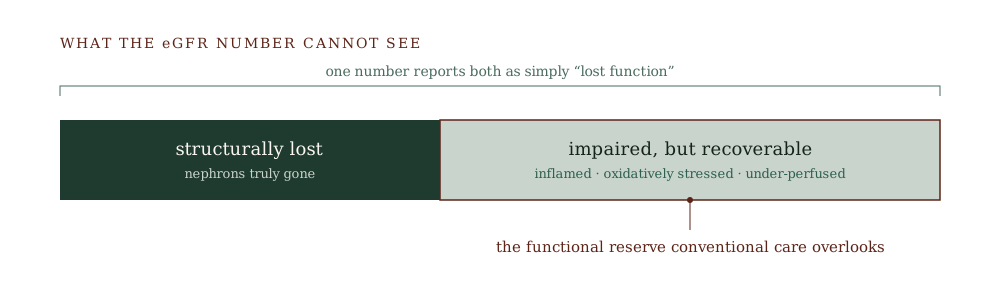
This is the central reframe. The kidney often has more functional reserve than its biomarkers suggest. The reserve is not random; it depends on the underlying drivers of the disease. When those drivers are addressed comprehensively, the reserve becomes accessible, and the kidney can recover function in ways that the conventional model considers unlikely because the conventional model never asked the question.
What the actual drivers usually are
The patient sitting in the clinic chair almost never has just kidney disease. They have a constellation of metabolic and inflammatory dysfunction that has been damaging the kidney for years, sometimes decades. The kidney is the organ that finally showed the symptom. The disease started elsewhere.
In the most common pattern — and this matches the majority of cases I see in clinic — the underlying picture involves three drivers, almost always together.
The first is poorly controlled blood sugar, even when the conventional measurements look acceptable. HbA1c of 7.0 is considered adequate diabetic control by most protocols. The kidney does not agree. The microvasculature of the glomerulus is exquisitely sensitive to glycemic excursions, advanced glycation end products, and the inflammatory cascade that chronic hyperglycemia produces. A patient on glycemic control good enough to satisfy their endocrinologist may still be producing the metabolic substrate that drives diabetic nephropathy. This is the largest single driver of CKD globally, and it is the driver conventional management most often fails to address upstream.
The second is hypertension that is being chemically suppressed without the underlying drivers being corrected. The patient is on three medications. Their blood pressure reads acceptable. The medications are doing their pharmacological job. The medications are not addressing why the patient developed hypertension in the first place — which is usually some combination of insulin resistance, magnesium deficiency, sodium-potassium imbalance, chronic inflammation, sleep dysfunction, and stress physiology. The kidney is hypertensive at its arterioles whether the systemic blood pressure reads 130/85 or 145/95. The medications mask the systemic number while the underlying microvascular damage continues.
The third is overweight or obesity that has been treated as a lifestyle issue rather than a metabolic one. Excess adiposity is not cosmetic. It is an inflammatory, hormonally active tissue that releases cytokines, alters insulin signalling, increases oxidative stress, and contributes directly to renal injury through mechanisms that include glomerular hyperfiltration, ectopic lipid deposition, and the sustained low-grade inflammatory state that characterises metabolic syndrome.
These three drivers — dysglycemia, hypertension, and adiposity — are present together in the majority of CKD patients. They are also rarely addressed comprehensively in conventional management. The patient is told to watch their diet, prescribed more medications, and monitored. The drivers continue.
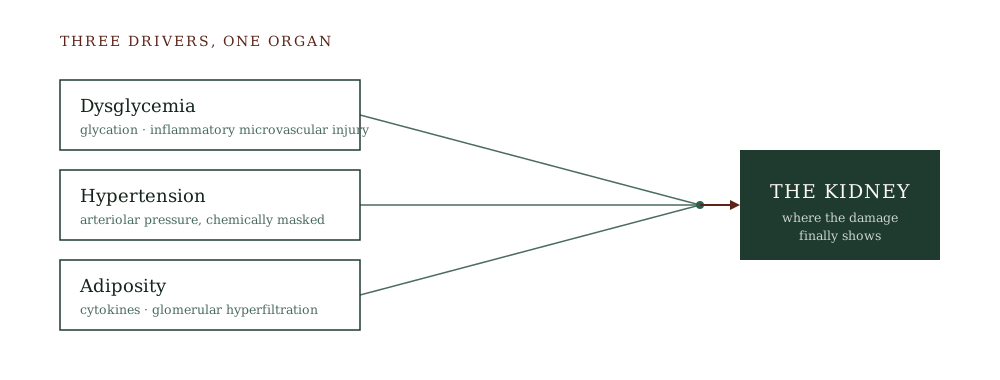
The functional medicine approach starts here. You cannot meaningfully recover kidney function while leaving the metabolic dysfunction that is driving the damage in place. Comprehensive metabolic correction — insulin sensitivity restoration, blood pressure normalisation through addressing underlying causes rather than only suppressing symptoms, weight reduction through metabolic rather than caloric framing — is the upstream lever. Without it, kidney-specific protocols are downstream patching. With it, kidney-specific protocols become genuinely restorative.
What clinical improvement actually looks like
When the work is done properly — root cause correction plus comprehensive renal-supportive protocol — the changes the patient and their clinician can observe are specific and measurable.
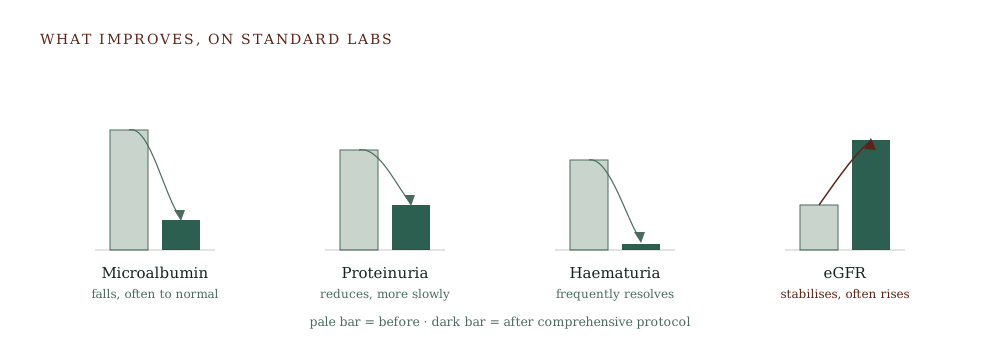
Microalbumin in the urine often falls. Sometimes substantially. Sometimes back into the normal range. This is one of the cleanest clinical signals that glomerular function is recovering, because microalbumin reflects the integrity of the glomerular filtration barrier. When that barrier improves, microalbumin drops. The reduction is not theoretical; it shows up on standard labs.
Proteinuria, which reflects more substantial barrier damage, also tends to reduce with proper protocols. The change is usually slower than microalbumin reduction but is similarly measurable on standard urinalysis.
Haematuria — blood in the urine that often accompanies glomerular inflammation — frequently resolves entirely with comprehensive protocols, particularly when the underlying inflammatory drivers are addressed.
Estimated glomerular filtration rate, the most clinically watched marker, often stabilises and frequently improves. The improvement is typically gradual, measured over months rather than weeks, and depends heavily on the disease stage at which the work began. Patients in Stage 1 to Stage 3 frequently see eGFR improvements of meaningful magnitude — often returning from impaired ranges into ranges considered normal or near-normal. Stage 3b and Stage 4 patients see more modest improvements but frequently see stabilisation where conventional management would have predicted continued decline. Stage 5 patients are a different conversation, addressed below.
Beyond the standard markers, patients typically report subjective improvements that the laboratory does not capture but that matter clinically. Energy returns. Brain fog clears. The morning facial swelling that many CKD patients have learned to live with reduces. Blood pressure becomes easier to control, sometimes allowing medication reduction under medical supervision. Sleep improves. The patient begins to feel that they have a body that is working with them rather than slowly failing under them.
These outcomes are not guaranteed. They depend on the stage at which work begins, the comprehensiveness of the protocol, the patient’s adherence, and individual factors that are not always predictable. They are also not rare. In serious functional medicine practice, applied across the population of patients who present with early to mid-stage CKD and who engage seriously with comprehensive protocols, this pattern of improvement is the rule rather than the exception.
This is the clinical reality that the conventional paradigm has not investigated. It is also the clinical reality that gives the patient sitting in the chair, having been told to wait for dialysis, a different set of options than they were aware of.
The mechanistic case — why this works
The clinical observations have a coherent biological basis. The functional medicine kidney protocol is not based on hope. It is based on what is known about how nephrons fail and what they need in order to recover.
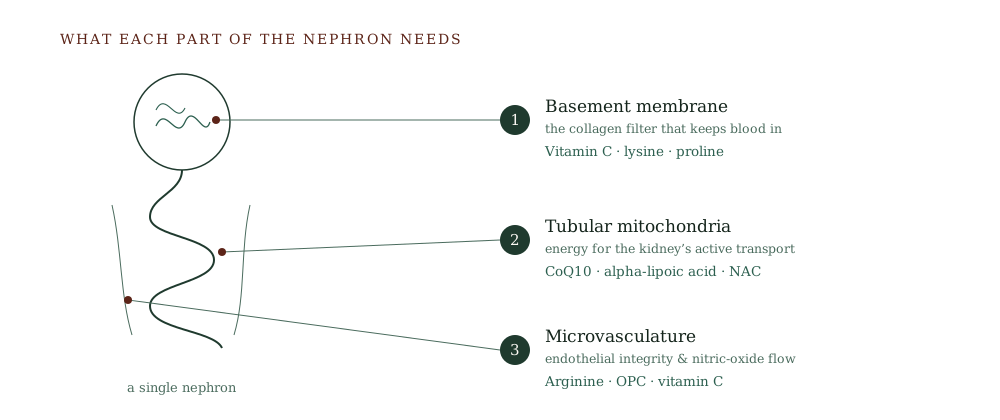
Glomerular filtration depends on the integrity of the basement membrane, a collagen-rich structure that separates the blood from the filtrate. When this membrane is damaged, proteins and red blood cells leak into the urine. When it is compromised but not destroyed, supporting collagen synthesis through adequate vitamin C, lysine, and proline can restore membrane integrity over time. The previous article in this series addressed the role of vitamin C in collagen synthesis at therapeutic dose. The kidney is one of the organs where this matters most, because the basement membrane is the structure that determines whether the kidney filters properly.
Tubular function depends on mitochondrial energy production. The proximal tubule, where most active transport occurs, is one of the most energy-dense tissues in the body — second only to the heart in mitochondrial density. Mitochondria that are oxidatively stressed, or depleted of CoQ10, or operating under chronic inflammation, produce less energy and the tubules cannot do their work. Mitochondrial support — CoQ10, alpha-lipoic acid, NAC for glutathione regeneration — is therefore not optional in serious renal protocols. It addresses one of the actual mechanisms of nephron impairment. Patients on long-term statins, which deplete CoQ10, often have an iatrogenic component to their kidney impairment that goes unrecognised in conventional management.
Renal microvascular function depends on endothelial integrity, nitric oxide signalling, and antioxidant capacity. Arginine, which is the substrate for nitric oxide synthesis, supports glomerular perfusion and vascular relaxation. Oligomeric proanthocyanidins from grape seed and similar sources protect the capillary endothelium and reduce oxidative damage at the microvascular level. Vitamin C, again, contributes here through endothelial function support and antioxidant action.
Inflammation, which underlies most CKD progression, responds to specific nutritional interventions. Omega-3 fatty acids modulate inflammatory cytokine production. Curcumin and similar polyphenols reduce NF-κB signalling. Adequate vitamin D status modulates the renin-angiotensin system and immune function. Zinc supports multiple enzyme systems involved in oxidative defence and immune regulation.
Hormonal and metabolic dimensions matter too. Isoflavones support vascular function and have specific renoprotective effects in some literature. Ginsenosides, the active compounds from Panax ginseng, have a substantial published literature on renoprotection — they reduce oxidative stress, support mitochondrial function, modulate inflammation, and have been investigated in both diabetic nephropathy and contrast-induced kidney injury contexts.
Each of these agents is not magical. Each has a specific mechanism. The protocol that works clinically is the one that integrates them in combinations calibrated to the individual patient — their stage of disease, their underlying drivers, their comorbidities, their medication interactions, their tolerance, their response over time. The art of functional medicine kidney work lies in the calibration. The science underlying the calibration is solid.
The integrative dimension
Functional medicine kidney work, in serious practice, does not operate alone. The protocol I have just described is the nutritional and biochemical core. Around it sit several other modalities that contribute to outcomes in ways that the core alone cannot.
Traditional Chinese Medicine has a deep, multi-thousand-year clinical tradition around kidney support that is not adequately captured by Western nutritional medicine alone. The TCM concept of tonifying the kidney (補腎) involves specific herbs, formulas, and approaches that have been used clinically for centuries and that have, in many cases, accumulating peer-reviewed pharmacological literature behind them. Specific herbs in this category have demonstrated renoprotective effects in published research — anti-inflammatory action, antioxidant defence, supportive effects on glomerular and tubular function. In integrative practice in Asia, where I work, TCM kidney support is a real clinical resource that adds to what nutritional medicine alone can deliver.
Acupuncture has a smaller but real evidence base for kidney support, particularly around blood pressure modulation, fluid handling, and the autonomic dimensions of renal physiology.
For patients with more advanced disease — Stage 4 and into Stage 5 — additional therapeutic options become important. Regenerative medicine has emerged in the past decade as a genuinely new dimension of kidney care, and the clinical signal is real even though the field is still evolving.
Exosome therapy — the use of extracellular vesicles released by stem cells, which carry signalling molecules that promote tissue repair — has shown particular promise in renal contexts. The mechanism is biologically interesting: rather than introducing whole cells, exosome therapy delivers the molecular signals that stem cells use to communicate with and influence damaged tissue, including signals that support tubular cell recovery, reduce inflammation, and modulate the local immune environment. The clinical evidence is still developing, and exosome therapy should be approached as an emerging modality rather than an established one — but in advanced CKD, where conventional management has little to offer, the rational case for exploring it is strong.
Stem cell-based protocols, including mesenchymal stem cell therapy, are similarly emerging as a tool for advanced renal disease. The published research base is growing. The clinical observations from centres that have been using these protocols seriously are encouraging. These are not first-line interventions. They are options that exist for patients whose conventional prognosis has been written off, and they represent a genuinely different conversation than the dialysis-and-decline framing.
For the patient sitting in the clinic chair with Stage 4 disease, the conversation is therefore not we cannot help you. It is the help available is broader and more complex than conventional nephrology has told you, it requires comprehensive protocols rather than a single intervention, and it includes emerging regenerative therapies that the conventional system is only beginning to integrate. This is genuinely different from waiting.
The stage gradient — honest framing
It would be dishonest to suggest that all CKD patients respond equally to functional medicine and integrative protocols. They do not. The stage at which the work begins matters enormously, and the protocol intensity required scales with the disease stage.
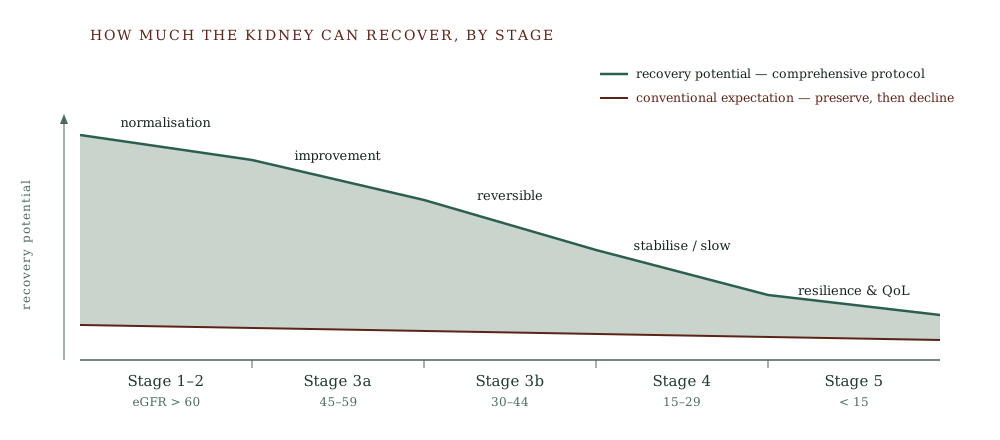
In Stages 1 and 2 — eGFR above 60, often with microalbumin or proteinuria as the marker driving the diagnosis — comprehensive functional medicine protocols frequently produce clinical normalisation. Many of these patients, with proper root-cause correction and renal-supportive protocols, return to ranges that no longer meet CKD criteria. The work is comprehensive but the outcomes are often dramatic.
In Stage 3 — the largest single CKD population — the picture is highly favourable. Stage 3a (eGFR 45-59) responds well to comprehensive protocols, with most patients showing meaningful eGFR improvement, proteinuria reduction, and biomarker normalisation over six to twelve months of serious work. Stage 3b (eGFR 30-44) is harder but still genuinely responsive — improvement is more modest, takes longer, and requires more intensive protocols, but the trajectory is frequently reversible.
In Stage 4 (eGFR 15-29), the work becomes more demanding. The protocol must be more intensive. The integration of regenerative therapies becomes more relevant. The patient’s adherence has to be higher because the margin for error is smaller. Outcomes are more variable but are still substantively different from conventional management’s prediction of inevitable progression. Many Stage 4 patients can be stabilised, some can be improved, and the trajectory toward dialysis can frequently be slowed or even reversed.
In Stage 5 (eGFR below 15), where dialysis is imminent or already in place, the conversation changes. Functional medicine alone cannot reverse the structural loss that has typically occurred at this stage. But the integrative toolkit — regenerative therapies, comprehensive metabolic correction, careful nutritional support, integration with conventional dialysis where appropriate — can substantially improve quality of life, reduce dialysis-related complications, support overall physiological resilience, and in some cases create the possibility of reduced dialysis frequency or improved candidacy for transplant. The framing here is not reversal in the simple sense. It is the substantial difference between waiting for the disease to take its course and actively engaging the body’s remaining repair capacity through every available modality.
No stage is hopeless. The appropriate response varies by stage. The patient who walks into clinic at Stage 5 deserves a different conversation than the patient who walks in at Stage 2, but both deserve a conversation that goes meaningfully beyond what conventional management has offered them.
Why conventional nephrology has not investigated this
The natural question — for the patient, for the family member, for the conventional clinician reading this article — is why, if these approaches work as described, conventional nephrology has not adopted them. The answer is the same answer that runs through this entire series, applied specifically.
There is no patentable molecule in functional medicine kidney recovery. Vitamin C, arginine, lysine, proline, CoQ10, NAC, alpha-lipoic acid, the omega-3 fatty acids, the polyphenols — these are public-domain nutrients. No pharmaceutical company can build a billion-dollar drug from them. No clinical trial of the multi-agent comprehensive protocol can be funded by the institutional structure that funds most clinical research, because no commercial actor stands to profit from the result. The evidence base that would normally drive guideline change — multi-centre randomised controlled trials of patentable interventions — does not exist for this approach because no one with funding has reason to generate it.
This is not a conspiracy. It is the structure of how clinical evidence is generated in a system where the funding for evidence generation comes overwhelmingly from commercial actors with patentable products. In specialties where the clinical reality is that combination protocols of public-domain agents produce the strongest outcomes — which is most of functional medicine — the evidence base will always lag behind the clinical observation. This is not a feature of the approach. It is a feature of the system that adjudicates evidence.
Mainstream voices have documented this pattern. Marcia Angell, former editor of the New England Journal of Medicine, on the financial capture of the medical literature. John Ioannidis at Stanford, on the systematic biases in published clinical research. Ben Goldacre at Oxford, on the publication bias that makes positive trials of pharmaceutical interventions visible while negative trials and trials of non-pharmaceutical interventions remain invisible. The institutional silence around functional medicine kidney recovery is not an accident. It is the predictable output of a system whose funding structure cannot reward the investigation of public-domain solutions.
The patient does not need to wait for that system to catch up. The clinical reality observed in serious functional medicine practice does not depend on regulatory acknowledgment to be true. It depends on the same things that any clinical observation depends on — careful patient selection, comprehensive protocols, biomarker tracking, clinical follow-up, adjustment over time, and the accumulated experience of practitioners who have been doing the work for long enough to see the patterns clearly.
A closing argument
The patient who walked into the clinic in this article’s opening had been told that the goal was to slow the decline. They had been told that dialysis was the eventual destination. They had begun, quietly, to wait.
The argument of this article is that they do not need to wait. That the clinical reality, when comprehensive root-cause correction is paired with integrative renal-supportive protocols, is meaningfully different from the trajectory conventional management predicts. That early to mid-stage kidney decline is frequently improvable. That advanced kidney decline, while harder, is not the closed door it has been framed as. That regenerative therapies are a genuinely new dimension of advanced renal care that adds to what nutritional medicine alone can offer. That the patient sitting in the chair, having been told there are no options, has not been told the truth about the options that exist.
This article is not a treatment plan. The protocols described here are deliberately not specified at the level of dose and timing, because the dose and timing for any specific patient depends on their stage, their drivers, their comorbidities, their medication picture, and their response over time. What the article does specify is the direction of the conversation. The conversation that begins with engaging a clinician trained in nutritional and functional medicine, who can read the patient’s actual clinical picture, who can address the metabolic and inflammatory drivers upstream of the kidney, who can design a comprehensive renal-supportive protocol calibrated to the individual, who can integrate TCM and where appropriate regenerative therapies, and who can monitor the response with the seriousness that the disease deserves.
Vitamin C, arginine, lysine, proline, OPC, zinc, vitamin D3, CoQ10, NAC, isoflavones, ginsenosides — these are the building blocks. The protocol is the calibration of the building blocks to the patient. The clinician is the person who does the calibration. The improvement that follows is what happens when the kidney finally has what it needs to recover the function it has been quietly trying to recover for years, against the constant pressure of unaddressed metabolic dysfunction.
This is not a promise of cure. It is a promise of agency.
The patient sitting in the chair, who has accepted that decline is inevitable, who has begun to wait — that patient has been given an incomplete map. The complete map includes more than the conventional system has told them. The complete map includes work that is specific, demanding, comprehensive, and clinically real. The complete map does not guarantee a return to perfect kidney function. It does guarantee that there is more available than waiting. It does guarantee that the body has more capacity for recovery than the conventional model has acknowledged. And it does guarantee that the conversation with a clinician trained in this work will be substantively different from the conversation that ended in the waiting.
That difference is the entire point. It is the difference between hope grounded in clinical reality and hope offered as marketing. It is the difference between a patient with options and a patient resigned. It is the difference, often, between a trajectory that ends in dialysis and one that does not.
The waiting is not necessary. The map exists. The work is real. And the patient who reads this article, having been told what they have been told, deserves to know.